
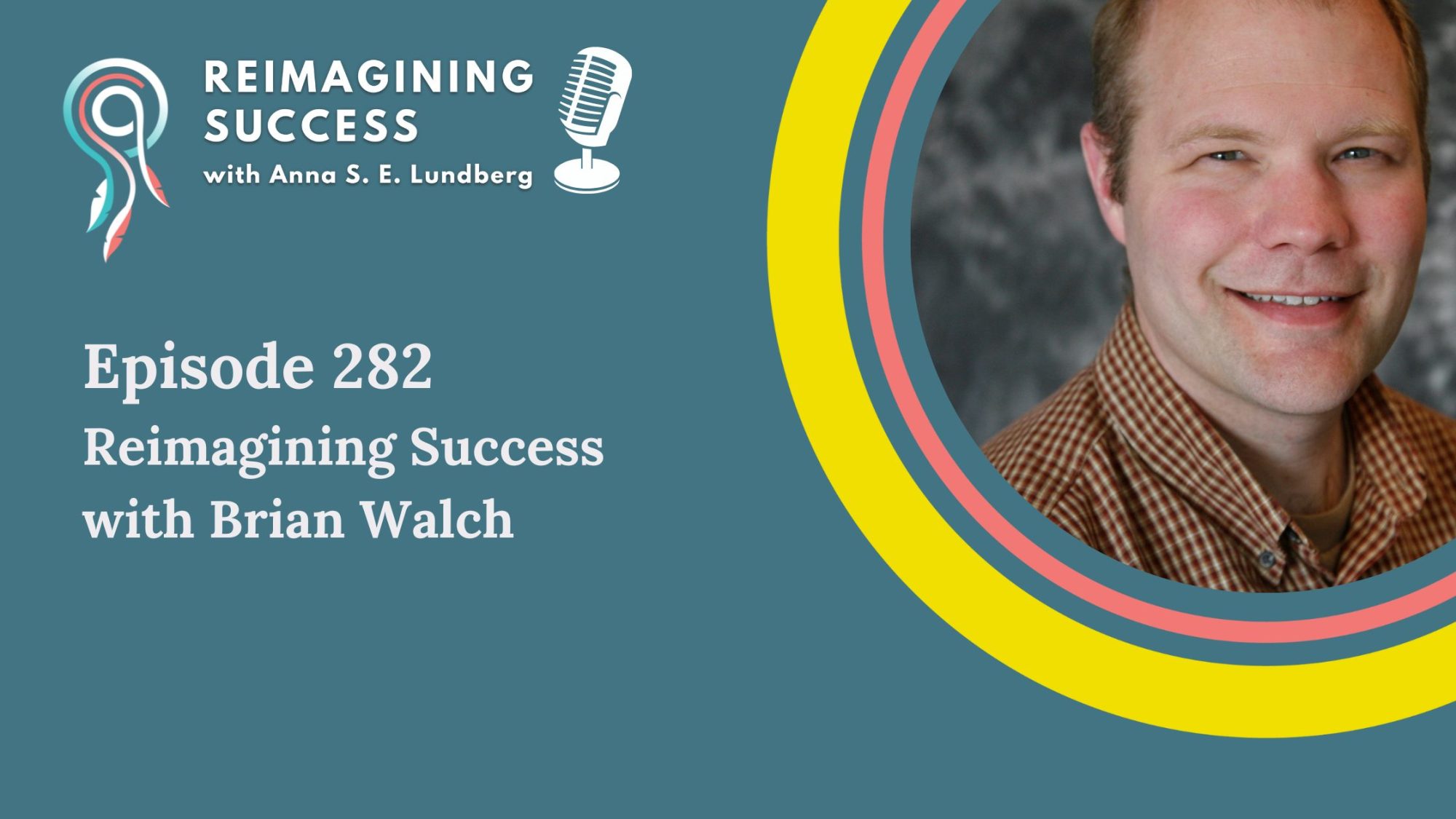


 In this episode, management coach Brian Walch and I delve into the intricacies of achieving work-life balance, the freedom that structure can provide in our lives, and the essential boundaries needed for integrating our careers with our personal lives.
Brian, a champion of the four-day workweek, shares his perspective on carving out time for flexibility and the necessity of financial reserves when embarking on entrepreneurial ventures. We both reflect on the rewarding yet demanding nature of self-employment and the challenges that come with leaving a stable corporate job.
Brian offers his insight as someone who aids managers making the transition into executive roles, impacting company culture and resilience. His work spans various industries in Alaska, encompassing both remote and in-person coaching. Beyond that, he provides guidance on building a personal brand with clarity and authenticity.
Having transitioned from growing an IT consulting firm to coaching, Brian understands the complexities of redefining success in a new stage of your career. We discuss the importance of enjoying work, the power of social connections, and the enduring process of defining your value proposition. In an age where identity and focus are critical, Brian gives us a look into his own journey of creating a niche and solving specific problems for his audience.
And as we explore the challenge of balancing our professional and personal identities, Brian shares his approach to work-life integration, including how he prioritises health and sets aside dedicated working time with his wife.
Without further ado, let’s step into this insightful conversation with Brian Walch – it’s an episode you won’t want to miss, particularly if you’re navigating the waters of management, entrepreneurship, or simply pursuing a more fulfilling career.
You can connect with Brian on LinkedIn and his website.
00:00 Transition from work to focus on retirement.
06:02 Transitioning from team to solopreneur: community support crucial.
07:50 Building relationships takes time and patience.
12:27 Middle managers are essential for organisational resilience.
15:20 Navigating product and personal development with marketing.
18:20 Adapting to change and labelling challenges.
23:47 Balancing health and work for successful life.
26:21 Adapting work routine, prioritising flexibility and routine.
28:37 Financial reserves and supportive spouse enabled career change.
31:57 Business website shiftfocus.com, subscribe for management ideas.
Management coaching in Alaska
Anna Lundberg:
Hello everybody, and welcome back to another interview. And this time I’m here with Brian Walsh who’s very kindly calling in early in the morning for him over in Anchorage in Alaska. So Brian, welcome to the Reimagining Success podcast. I’d love for you to introduce yourself and tell us a little bit about what you’ve been doing before and perhaps what you’re doing differently now.
Brian Walch:
Thank you, Anna. Yeah, I’m excited to be with you this morning. I am an executive coach or a management coach is what I say. So I help organisations develop their managers and build a management culture. I have been doing this for about two years now. So I started doing something a little bit different, kind of worked my way through what do I want to do? And ended up in executive coaching space. Before this I spent 25 years in an it consulting firm. I started out as a software developer.
Brian Walch:
The firm was about 25 employees and we grew. Over the 25 years we grew to over 200 employees, seven offices. I did almost like every component of that business. Like two years ago I decided it was time to make a change.
Anna Lundberg:
Well, tell me more about that. What was it that triggered you? What was it that gave you that nudge to make a change two years ago?
Brian Walch:
It was several things. One I had always wanted. I was kind of like business minded. I would have thought like I would have my own business. But the lure of corporate and kind of stability was strong and it was also important. I raised four kids, so having that stability was really important. Our company had gone through some changes and we were kind of changing out some of our senior management and it was a chance for me to do something different. And I thought, well, if I’m going to reinvest in building up a new part of my career doing this, maybe this is a time to look at doing something different.
Brian Walch:
But the other thing that was really probably the stronger thing was I had noticed in the last several years that I’d really changed from really enjoying work to thinking about how could I save as much as I could so that I could stop working earlier. And in my mind I enjoy work like I enjoy doing things, producing things, getting things done, I enjoy the interactions. And I’d always had my mind like, I don’t really want to retire. I want to have the flexibility and control to work when I want and how I want and what I want to do, but I don’t really want to retire. And over the last three to five years of my career, that’s all I’d been focused on was how can I save enough when am I going to be able to retire? And I was like, that’s not really my ethos. That’s not what I want. And that was probably a bigger driving factor. And I got to make a change now if I’m going to build the life I want when I’m 60 and 70.
Anna Lundberg:
That’s so interesting. And I share that ethos, too, and I think that is a bit of a red flag, I suppose. I always see people, and in fact, funnily enough, if you’re on Facebook, which I rarely am anymore, I must say. But I get those memories from 15 years ago. And it’s almost always every Friday it’s TGIF, and then every Monday it’s, oh, no, it’s another terrible Monday. And we’re counting the hours until the end of the day, counting the days till the weekend, counting the weeks until the next holiday. And I suppose in sort of an even grander scheme, that’s what some people end up doing. You’re counting the months, years until you can stop working altogether.
Anna Lundberg:
And that’s a shame because, yeah, as I said, I share your ethos that really, I want work to be enjoyable. I want to make a difference. And I don’t think I can or want to retire bang on the dot when I’m 65, as people used to do. So that’s a really interesting reflection. I’m sure some people might recognise themselves in that moment of, oh, I don’t enjoy this as much as I used to.
Brian Walch:
Yeah, and I’m getting old enough where some of my friends went into retirement and I saw several of them retire and they were bored, they weren’t happy. And I thought, okay, you can’t just work to that point and then figure it out. You have to be thinking ahead and figuring out what is retirement in that part of your life look like and what do you want it to look.
Anna Lundberg:
Like and what do you want it to look like? We talk about sort of what success looks like, and you’ve been successful in your it career. So what does success look like for you now in this next stage of your career?
Brian Walch:
It is a couple of things. One, it’s partly why we do some of this on our own, is the lifestyle, the flexibility. And so part of it’s that flexibility that I think everybody wants, being able to work when you want and do that. And from a financial perspective, you can work a bunch in a compressed time, or you can work a little less over a longer period. And so there’s that kind of flexibility. But I think the other thing is, work gives you the social construct. You build a lot of friendships and social connections. And so for me, I want to also have that in my solo work.
Brian Walch:
Part of it’s like connections like this, like we meet over entrepreneur community or other
 communities that you’re part of. But also the work I do is kind of a personal type of work. When you’re coaching somebody, you’re developing a relationship with them. And I want to build a network of people that I have helped and have helped me, and we continue those relationships long beyond when we’ve just done our work. And so that’s my vision of what do I want work to look like. There’s also a social component of it that you carry on long into your.
Anna Lundberg:
Quote unquote retirement years, and that’s so important as well. And I think a lot of people who leave the team environment in a big sort of bustling office, although that can be distracting, we miss that when we are working for ourselves. And I always say, because you’re a solopreneur doesn’t mean you have to be completely solo. And again, this is one of my favourite things, is of course having these podcast conversations, communities and having the social element. I mean, I’m going in to do some workshops tomorrow in offices and I’m meeting the teams and we’re interacting and so on. So those relationships are so important to nurture and I think that support network as well of people, as you mentioned, the communities of people who are doing similar things, maybe going through similar challenges and also cheering you on and so on is so important. So how have you found it navigating that transition from the organisational context and something I imagine you knew how to do with your eyes closed into this new world. How have you become confident and believed in your abilities to make this work for yourself?
Brian Walch:
Yeah, it’s definitely a journey. I think it’s been surprising how drastic the changes from a corporate environment to a solo environment. You think when you leave a regular job and you go start on your own, you’re going to be able to maintain all those relationships that you had. It’ll just be a little different. And it’s not. You don’t. Those relationships, they’ve changed just by nature of you changing your relationship to the organisation. So that was kind of a surprise of how quickly that changed in terms of leaving your old corporate professional network.
Brian Walch:
And then I’ve really enjoyed, but it’s been slower building new relationships with people. When you invest and you kind of grow these, you just have to be patient. I guess that’s kind of when I say it’s a journey, it’s like I have this vision of like, oh, as I move into this solo life, it’s going to have all these people that are friends and also clients. And I think it’s just something you be patient with and over time you start looking around and realising like, oh, I really have a history now with this person and we can refer to these things. And it’s not just by nature of our work relationship. And that has changed with me being an employee of a company versus me being the business. I don’t know if that makes sense, but it is a different thing when they say I’m an employee of a company versus it’s me, I’m the business. Yeah.
Anna Lundberg:
I mean, then it’s different on so many levels. I think I was in marketing and I had a sales team, an HR team and a product supply. All this structure around you, not to mention the budget and all sorts, right. And mentors and bosses. And of course there are negative aspects of that. But again, you couldn’t miss that structure when you leave. I think patience is a really key word though, right? Because I think we can. And that moment when I left my job, it’s now almost eleven years ago now and it’s a big moment.
Anna Lundberg:
And I sort of thought, wow, I’m going to now live my best and most fulfilled life just like that. And of course I have had an amazing time, but it’s certainly been a roller coaster. And then as you pivot and change along the way, as you’ll find over the next decade or so, then again, you sort of almost start as a beginner again. So there are ups and downs and having, as you say, those sort of strong relationships there I think is really important. And you mentioned that you’re an executive coach, or you called it management coach. I’d love to hear about that distinction. And what is the structure of the kind of work that you’re doing? What is your business model now?
Brian Walch:
Yeah, executive coach is kind of the term. I mean, I’m a certified executive coach. I’ve got my credentials from the International coaching Federation and so my title would be executive coach. But I describe myself as a management coach because I really focus on helping managers develop. Managers have this outsized impact in both how people feel about work and their company, but also how they feel about the work and their enjoyment and work. And so that’s really kind of where I want to make my mark, is helping managers as they transition into management and grow in management and eventually some of them will move into executive and then they can influence how management is done at their company. So that’s why I call myself a management coach and it kind of works. I do a lot of one on one coaching and then also group coaching.
Brian Walch:
And so I’ve got a methodology that kind of helps people move from leading yourself and self leadership because you’ve probably experienced in the corporate career. A lot of people move into management and out of an individual contributor role. And as I’ve gone in through that individual contributor role, they have people telling them kind of here’s how the steps to take, here’s how you progress, here’s the people that can help you, and then as you move into management, that becomes a lot less defined. Results and success looks a lot different. Sometimes that’s pretty ambiguous. Your peers have kind of moved on, your mentors have maybe moved on. And so it’s figuring out how do I lead myself into this management career and be really successful at it and help others. And then as you build that, then how do I lead my team and help them be successful and enjoy their.
Anna Lundberg:
Work and such an important level of organisation. I think everybody now agrees managers really is where we should be focusing our attention. So I think there’s obviously a huge opportunity there. And I look at it through the eyes of hybrid as well, that there’s this new challenge of managing people, perhaps virtually in different locations and so on, which I think adds some complexity. Is that something that you’re finding in the organisation and also what organisations do you work with? Are you working still in the it area or have you broadened a little bit now that you’re doing your coaching and working with companies independently?
Brian Walch:
Yeah, yeah, it’s mean. I definitely agree. Management is kind of getting a little bit of a resurgence. Middle managers were these kind of maligned Dilbert type characters of people that are kind of bumbling around. And there’s a lot of research and studies coming out by some really leading institutions showing just the value of managers, these middle managers, and how they’re really the glue that can help organisations be more resilient, how they can help them navigate change. And like you said, with the hybrid work, everybody’s got their own personal thing that they want to do or how they want to approach work. And managers are really the kind of the middle ground that helps tie that between the company’s mission and personal desires in regards to my work, because I’ve got a pretty strong technical background and I’ve worked a lot in it. I work well, with people that are moving into technical management, that was my career and so I’m familiar with that.
Brian Walch:
And so I work with some people like that. But then also, so in terms of industries, Alaska is a really unique place. We’ve got a lot of industry here, a lot of kind of big initiatives, a lot of oil and gas, tourism, transportation. And so I don’t really focus on a specific industry. So I’m working in some transportation, I’m working in research and then kind of more service based industries. So it spans the gamut. So, like my target is the kind of the middle management layer. But definitely because of my background, I have an affinity for people that are in the kind of the technical space either doing product development or consulting.
Anna Lundberg:
Yeah, and there are different ways of niching. Of course, if you’re working rather in your location of Alaska, that makes sense. Are you doing more in person work in that case, or are you still working virtually?
Brian Walch:
It’s both. So if they’re here in Alaska, it’s great to be able to meet face to face. And a lot of times we’ll do a couple face to face meetings or I’ll go in and meet with the team and then we’ll continue virtually. But then I have some clients that we’ve never met in person. They’re all virtual just by their location. So I don’t necessarily constrain myself to Alaska, but I got a good network here.
Anna Lundberg:
In terms of sort of promoting yourself, that’s a challenge that we all face. And again, I came from marketing, but marketing yourself, as it turns out, is quite different to marketing this sort of beautiful bottle of perfume over there. So how have you found that and how do you get your name and your face out there? How do you build your personal brand?
Brian Walch:
It’s been the most, I guess, surprising, difficult thing. I did a little bit of marketing, and I was always amazed at this interplay between product development and marketing. Product makes something and then marketing says, oh, how are we going to market that? And then marketing kind of says, well, now we need it to be this and this little bit of a stairstepping thing. And it hasn’t been that much different in my personal development, I’ve found that growing my personal brand. I found that I’ll say this is what I think I want to do and I’ll do a little work and then I’ll say, well, how do I talk about that? And then I’ll say, well, that doesn’t really make sense when I talk about it. I guess I got to do a little bit of this and so I felt that kind of stairstep in developing my personal brand. So the number one thing is being able to be clear. Like when I tell you, hey, I help managers and work with organisations to build their management culture.
Brian Walch:
That took a little bit of work, but I know 100% that’s what I want to do. That’s where I want to make my impact. I feel like if managers enjoy their work, their employees enjoy their work, they go home and they’re happier people with their families and with their friends, and they can give more to their community. I just feel like that’s where I can make an impact. So working to develop that something that feels good and authentic to myself and then being able to tell people about it has been really beneficial. And then again, because Alaska is kind of unique, I’ve had some opportunities. So I write an article for our local business magazine. I do a weekly email for people.
Brian Walch:
It’s just like some tips on management, how to be a good manager and then trying to do podcasts and things like this where I can talk about what I do and kind of further refine that message and then look for referrals. So it’s kind of a multipronged and constant effort.
Anna Lundberg:
Yeah, absolutely. And I think you’re so right, of course, that it starts with knowing who you are, what your value proposition is, what you bring. Because I think without that we can do all these things, podcast interviews and social media, but it becomes a confused mess. And I think if we don’t own and believe in what we offer, then how is any other client going to do it? And that can take some time. And it did sound like, as you said, you took some time to sort of find out exactly where you wanted to focus. And it may well evolve in the future. But for now it sounds like you’ve got a clear and confident elevator pitch, as it were, and you’re sort of systematically going about getting your name out there, which is great.
Brian Walch:
Yeah, it seems like it should be this easy thing, right? I thought this should be pretty simple. Yeah, I’ll define what I’m going to do and then I’ll go out and I’ll tell people. And I would say, yeah, it’s a process and it’s probably taken me a year and a half to two years to even get to this point. I feel good about it, but I know there’s always work to do and.
Anna Lundberg:
I think that’s both reassuring and scary to people who are listening, who are maybe further back because it takes a lot of time, but you will get there. And to be honest, it never ends right. Especially again, because things evolve. I’ve recently done a bit of a pivot in particular on the corporate side of my work, my b to b. And of course, then once again, you’re questioning a bit, like you said, am I an executive coach of a trainer, a business coach, a manager coach? It’s all these labels and things that are quite tricky to get right. I think we resist sort of putting ourselves in that box, don’t we? Because, of course, we’re beautiful, multifaceted people and to sort of force ourselves into this tiny little sentence is very tricky. But then, of course, there are so many other nuances to it. So it’s not that that’s who we are, but I think it’s definitely a good place to start.
Anna Lundberg:
And of course we can change it. So it’s not something to get too worried about, right, to just put it out there digital. It’s not that you’ve printed lots of brochures that you then have to pay lots of money to redo. It’s very easy to change your LinkedIn profile or your Instagram bio or whatever it is.
Brian Walch:
Yeah. I mean, when I started, I kind of started even with a different brand, different website, and it was a little bit more like, it was kind of like my personal journey. How do you bring your whole self to everything you do? And I changed. I was like, no, this is really where I want to focus. I shifted my focus, but I really want to focus on managers. But you’re exactly right, you can change and you do go through changes. And I think initially I was like, I got to build all this and then I’m going to go to market. I’ve realised, like, no, just kind of build it as you go, because the market is going to give you information, you’re going to learn about yourself.
Brian Walch:
And so I wouldn’t say it’s not uncomfortable sometimes it definitely is. But I am more comfortable with, yeah, things can change. Like you said, you can change your LinkedIn bio, and people aren’t, as you see yourself, way more critically than other people see you. And so if you’ve gotten more clear, people don’t remember what I was doing before, they’re like, oh, I get it. You’re helping managers, so they’re very receptive. The more clear you get and the more defined you get.
Anna Lundberg:
Well, that’s huge. And it’s a little bit conflicting, I find. But it’s interesting because, as you said, nobody cares about us. Sadly, as much as we do. So I can obsess about every post I’m putting out and so on, but most people might see it on the bus, on the toilet for a second. It’ll just flimmer by, forget all about it and they won’t say, oh, Anna, didn’t you say a few weeks ago that you were focusing on this aspect of management and now very few people are going to notice, perhaps your mother or your best friend or someone. So I think that’s, again, disappointing but also reassuring. It means you can sort of experiment and evolve as you go.
Anna Lundberg:
And I think that’s really important. I think we also come out of, I don’t know about you, but the coach training in particular, we’re all such evangelists for coaching because probably we’ve experienced ourselves. It’s so amazing. And in theory, coaching, we can coach anybody, which then makes it really difficult. And I, like you, went through that personal journey too. And I see people and I see my clients do it and they come out of the coach qualification and they basically put out posts saying how wonderful coaching is and I can coach you on everything and the goals and all this very general empowering things, but in no way do they stand out versus other people. And it’s all very sort of coachy language. It doesn’t really appear so.
Anna Lundberg:
It’s a natural journey for a lot of us to go on. Also, it’s very internal focused and that’s what’s happened.
Brian Walch:
Right.
Anna Lundberg:
We’ve transitioned probably for personal reasons, a little bit, like you said, with management, it’s self leadership and self awareness and starting there. But then there’s a point at which we have to turn outwards and look at what’s commercially viable. And that’s when we find, as you have sort of a viable niche and audience that really has a problem that you can solve with your offering, rather than just, hey, I can help you fulfil any goal in your life to become anything you want to be, which some coaches do succeed with. But I think most of us are not going to see such focused success for that particular message.
Brian Walch:
Right. Yeah. And it’s kind of the gift of starting your own business or going out on your own is you do have to go through that personal journey and then at some point you got to realise, but this is a business and now I got to get to work.
Anna Lundberg:
Exactly that. And you mentioned right at the beginning this idea of the lifestyle business, and I’m never quite sure about that term, but I think it does capture something really important. So I’m curious, what have you done to create that lifestyle around the business? And what does what I call work life integration or work life balance look like for you these days?
Brian Walch:
Yeah, I’m with you. I like the work life integration more than work life balance. And it becomes even more true when you’re a solopreneur. I guess there’s two levels. I kind of talked about it. One is like the lifespan of your working life. That to me is a big part of work life integration is how do you keep working and doing things longer term that you enjoy? If you’re thinking about, like for me, in the day to day. So I’ve raised four kids, they’re gone out of the house, so now we’re empty nesters.
Brian Walch:
And so what I try to do is one look at what are the important things to me, like my health is important. And so making sure that I protect some time for my health, like going to the gym and working out and just having a good time. And then I don’t know if this is exactly what you were asking, but one of the things we do is my wife and I both have a Monday night is a working night here. And so we have a quick dinner, pretty light dinner, and then we just sit and spend like two or 3 hours on Monday night working. And that’s totally an uninterrupted time. Usually I kind of get my week set up and kind of content calendar and working calendar and all that. I just have more responsibility for how do I structure my life to make it successful? That’s a really important kind of planning, getting all the email lists down and getting kind of everything organised. And then the day is pretty like, I’m pretty much open to schedule times with clients and be really responsive to clients when I do that.
Brian Walch:
Does that answer your question?
Anna Lundberg:
Yeah, absolutely. It’s always interesting to hear the different routines of people. And I’ve gone through phases of being completely flexible and sort of working anywhere and anytime and so on. And then I met my partner and he was in a nine to five, Monday to Friday. So I sort of fell back into that routine. When I had a new born baby, I was sort of working in the evenings because that was the only time I knew my partner would be home from work. And then now I’m sort of back to a Monday to Friday because the kids are at school. I’ve got younger children, so they’re still here for many years to come.
Anna Lundberg:
So it’s interesting to just to hear how you and I think the key that you mentioned is being intentionally build that structure. I think structure is what gives you the freedom and flexibility that you want. And if you want to work a Monday evening and you agree that with your partner, or a Sunday morning for that matter, if that works for you and your family, then that’s great. And then some people take, I’ve got Wednesdays with my son at home still at the moment, or sometimes I’m on holiday and I’ll do a little bit work and sometimes not at all. And I think that’s what’s so important. It’s finding the right balance for you. And as you said, protecting what’s really important, protecting your priorities, but also your family and your life priorities as well. Your health and relationships and all those really important people and things in your life.
Brian Walch:
Yeah, I came out at nine to five, and so I was pretty comfortable or indoctrinated to that. One of the things I found is partly I’ve had to remind myself, like, you did this, so you have more control over your schedule. And so I’ve kind of taken Fridays to be like, or given myself permission to Fridays not be as productive. I’ll schedule client calls that day, but if I don’t have client calls, I’ll just block the day out and maybe do some work, but also maybe do some house projects or do something. So if I have that time, I’ll take that time rather than look at my to do list and go, okay, what else can I get done today? So trying to almost force a little bit of more flexibility into my rigidity. And then the other thing is sometimes people, and this is just me personally, but sometimes people, I think, get into this type of solopreneur so they can work from anywhere. And I just have found that if I go someplace where I know I’m going to be set and have kind of a routine, I can work there. And we’ve done that.
Brian Walch:
We’ve done some trips, we’ll go visit our daughter in college, and I’ll be there for five days and I’ll know like three of the days I have five to 6 hours where we’re just going to be sitting in the Airbnb and I’ll be able to work. But if it’s a true vacation, then I don’t plan to work because you don’t do either well, you don’t do the vacation well, and you don’t do the work well if it’s too dynamic. So that’s the other thing I’ve kind of structured.
Anna Lundberg:
I guess that’s huge because I think integration can easily become sort of blurred boundaries. And as you said, then you’re neither present with your family nor working, and you’re not really getting anything done, are you? So those, in an ironic way, sort of the boundaries are what make the integration work. So we’ve had some really interesting insights. But is there any particular advice you’d give to someone, you’re still quite fresh in this process, a couple of years in, so maybe someone who’s in the first year or so, what advice might you give somebody or yourself, maybe a year or two back with the wisdom that you have now?
Brian Walch:
Yeah, I think there’s two things. One is I have the luxury of, my wife has a full time job, so at least here in the US, I don’t know about the UK, but in the US, you have to have health insurance, and we had enough financial reserves that I could do this, know, pressure on our, financial pressures on our relationship if I didn’t make money right out of the gate. And so having a little bit of Runway. So I think number one is, my expression is, you got to be able to make the Runway. So if you’re flying and you lose an engine, you want to be able to make the Runway. That was kind of one thing, is like, make sure you can at least make the Runway. It might not be pretty, but you’re not going to tank a relationship, tank your health, because you do something like, make sure you have the right priorities. And then the second is, it’s harder than you think, but it’s worth it.
Brian Walch:
Some of the things I look back on, I’m like, well, if I had known this, I don’t know if I would have done it, but I’m really happy I didn’t know it. So that I did try it, that I did get through some of the hard times. Like you said, you kind of start doing something and it becomes harder than you think. I didn’t know it’d be as hard to get clients or to figure out what I be able to say, what it is I do. That took a lot more work than I thought it would. And I think if I had known all that at the beginning, I would have second guessed whether I really wanted to do it. But all that hard work has been worth it. And I’m more confident today than I was a year ago that this is the right path.
Brian Walch:
So I’d say, make sure you got the Runway made and then realise it’s going to be harder than you think and still do it and embrace it.
Anna Lundberg:
Yes. Feel the bit to do it anyway. I think that financial Runway is so important, whether it’s a supportive partner or, of course, savings from previous roles and so on, and already perhaps having done some of the work, either as a side hustle or at least preparing and having that pipeline, I think is important. That’s a great metaphor and image to actually, if you’re going to crash and burn, at least try to make it and survive, and then you can piece it all together again afterwards, can’t you? So that’s a good reminder. And it is perhaps harder than we think, but I think it’s also better. In fact, my brother in law said that once about having children. I don’t know what you think about that, but he said, oh, it’s so much harder than I ever thought, but it’s also so much better. And maybe it’s the same thing that applies to working for yourself.
Anna Lundberg:
It’s both more fulfilling and freeing and wonderful and also terrifying and challenging and uncertain and so on.
Brian Walch:
So maybe that’s a similar 100% totally worth it. If you knew it all, you probably wouldn’t have done it and you’re glad you didn’t know it all.
Anna Lundberg:
Absolutely. Yeah. So maybe we’ll end it on that before we reveal any more of the terrible things that come with working for yourself. But Brian, thank you. Kids as well. Yes. Both warning to everybody, having a business and a baby, both very challenging but wonderfully rewarding. Yeah.
Anna Lundberg:
Brian, thank you so much for your time and for your generosity in sharing your experience and your insights. Where can we find you if we’d like to read more about you and the work that you do?
Brian Walch:
Yeah, thank you. So my business website is shiftfocus.com. So shiftfocus.com. And if you go there, you can learn a little bit more about me. And then at the bottom of the page, you can subscribe to my email, which is called simple Sundays. It’s just management ideas on how you can become a great manager, and that’s the best way for people to connect with me.
Anna Lundberg:
Perfect. Thank you so much, Brian. Enjoy the rest of your day and week since you’re just starting now, on Monday morning. Thank you so much again for your time. And, yeah, hopefully stay in touch and see where your journey takes you next.
Brian Walch:
Yeah, likewise. Anna, this has been a pleasure talking to you. I really appreciate it.
Anna Lundberg:
Thank you.
WORK WITH ANNA
Let us help you design a business and a life that gives you freedom from the 9 to 5. There are several options for how you can work with us. Choose the programme that’s right for you.
The Outsiders Business Incubator
A year-long business incubator for experienced corporate professionals who want to translate their skills and passions into a profitable and fulfilling business. onestepoutside.com/9to5
The Outsiders Business Accelerator
An ongoing mastermind for service-based business owners, freelancers and online entrepreneurs who are ready to achieve success on their own terms. onestepoutside.com/accelerate
The Outsiders Business Academy
A self-paced course for you to work through in your own time, to learn – and implement – the foundations of building a profitable business that lets you escape the 9 to 5. onestepoutside.com/course
1:1 Coaching & Mentoring
If you’re looking for one-to-one support to help you achieve your specific life and business goals, Anna has a limited number of spots for individual coaching and mentoring. onestepoutside.com/coaching


