
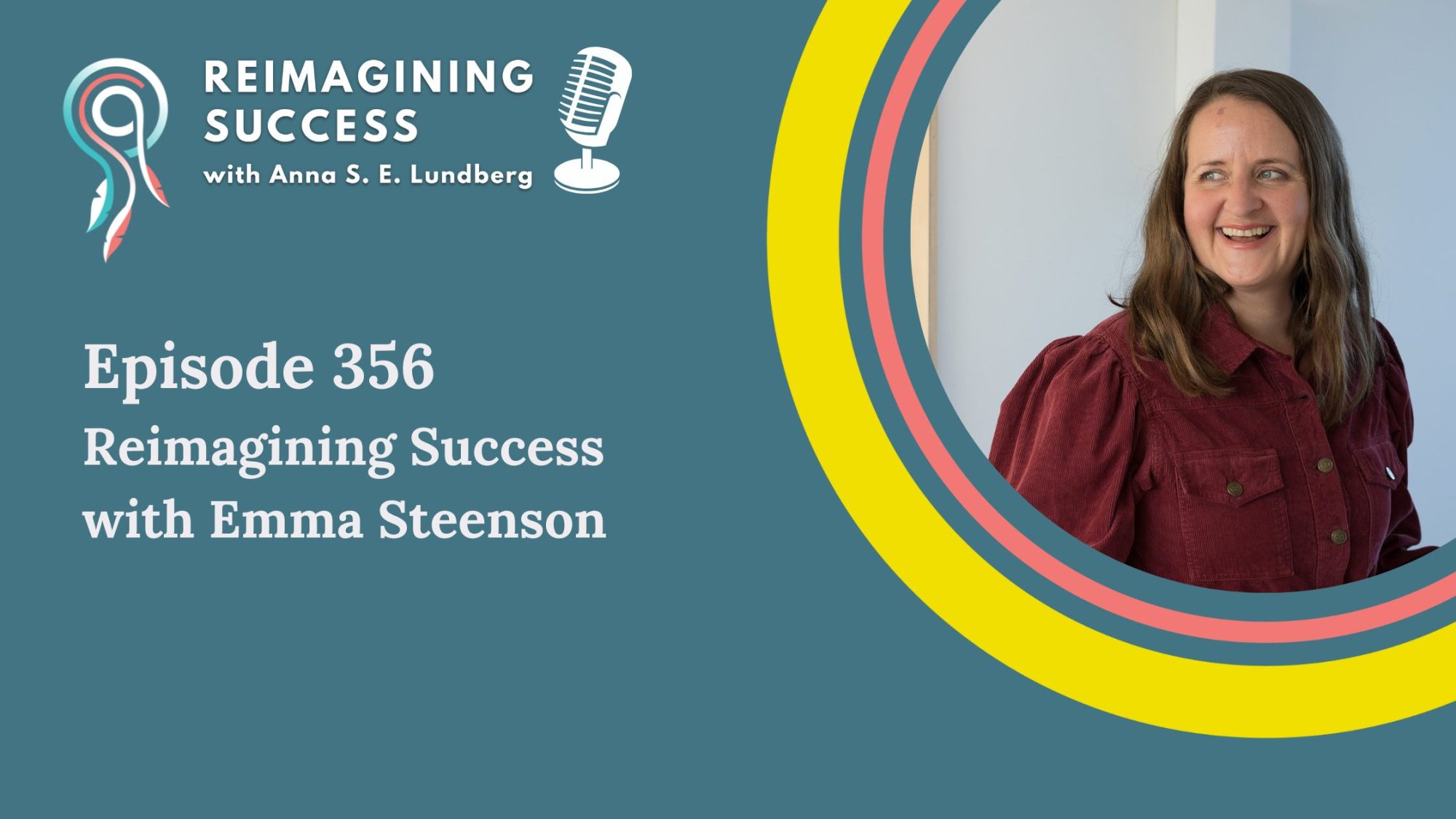


What if success wasn’t about more, but about enough? In this refreshingly honest conversation, Emma Steenson – former management consultant turned entrepreneur and executive coach – shares how selling a business and reaching financial security forced her to rethink success. If you’ve been running on autopilot – chasing “more” without stopping to ask what you really want – this episode will make you pause and rethink.
Key moments:
[00:00] Emma’s Introduction & Career Overview
[02:00] First Big Pivot: Leaving Corporate, Chasing Financial Success
[04:50] The Role of Family Influence & Early Entrepreneurial Steps
[07:40] Is “Success = Fulfilment” Only Possible After Achieving Financial Security?
[11:10] Enoughness: How Much Is Enough?
[13:55] The Realities of Building a Business and the “Struggling Coach” Stereotype
[17:38] Marketing Versus Sales as a Solopreneur
[21:08] Building a Personal Brand in a Crowded Market
[24:00] Handling Distraction and Staying True to Your Path
[27:04] What Emma’s Work-Life Looks Like Now
[28:59] Advice for When You’re in a Low Point
[32:50] Final Thoughts: The Value of the Journey
Resources mentioned:
- Emma Steenson’s website
- The Business Accelerator Programme: OneStepOutside.com/accelerate.
- Connect with Anna Lundberg: Get in touch on Instagram or LinkedIn.
1:1 Coaching & Mentoring
For experienced founders and independents who want a trusted thinking partner – not a programme or a group, but direct, personalised work at the level you’re actually operating at. Anna works with a very small number of clients at any one time.
How to know when you have enough
Anna Lundberg:
Hello everyone and welcome to this month’s interview. And I’m pleased to say I’m here with Emma Steenson. And Emma, as ever, I’m going to throw it straight over to you and ask you to introduce yourself and what were you doing before and what are you doing now?
Emma Steenson:
Great. Hi, everybody, I’m Emma Steenson. Before I was a management consultant in a classic corporate environment and now I’m an entrepreneur and executive coach. So I’ve actually, this is actually my third iteration, so management consultant, self employed property developer and also ran a professional services business and that was sold, which left me with sort of an accidental retirement. And I enjoyed that for a few months and then promptly decided that I needed a little bit more to life than just golf and tennis at that stage, enjoyable as it was. And so I retrained as an executive coach. I’ve. I’m actually studying for a master’s in coaching at the minute.
Emma Steenson:
And yeah, that’s, those are my iterations so far.
Anna Lundberg:
I love that and I especially love how you close that iterations and so far because in my question, and I think it’s a hangover from when I used to really focus on that moment of quitting your job to start a business. I always said, what were you doing before? What are you doing now? But as we know, it’s not so black and white, right. It’s many iterations, it’s continuously evolving, it’s big pivots, it’s small shifts and so on. So I think I’ll. I’ll retire that framing and I’ll ask a different question next time. But I suppose with that in mind, find the, the pivotal moment I am after is, as we’ve said, the, the change in how you look at success. So through those, the, the highlight pivots, I suppose that you had. What was it that led you to change from the corporate to working for yourself? And then now in the latest iteration as well.
Anna Lundberg:
Can you talk us through some of those shifts in perspective?
Emma Steenson:
Sure. So I kind of had the classic, probably for my era, upbringing in terms of education. You know, you go to university, you get a good job, it’s all of those sort of expectations. And I mean, I thoroughly embraced that university, did all the right things, moved to London straight after university. So I grew up in Ireland, but I moved, I’ve lived in London all my adult life. So, you know, came to work in the city, got the corporate job and then realised, actually I was just looked around at what was happening, the men who were being promoted and the women who weren’t. And I was like, okay, you know, I was ambitious. I wanted to, to do really well.
Emma Steenson:
I wanted to be, I guess at that time financial success to me was kind of like that was the bottom line that summed up everything. And yeah, I just kind of figured I could just see what was happening and I thought I can, you know, I could do this, but I’m probably going to have to sell my soul. You know, weekends, travelling, all that sort of stuff. And I was like, actually I think if I work for myself, I’ll probably do just as well. And I decide how much effort goes into it. And so.
Anna Lundberg:
Interesting. Sorry. Before you move to the next one also. That’s because you still have the same definition of success. Right. But you realise that, hang on. What it takes to get there in this environment is not something I’m willing to sign up for. So it’s more the how that you’re disagreeing with and then you’ve got the confidence, which is amazing to say, hey, I can do as well, if not better by myself.
Emma Steenson:
Yeah. And I guess I was fortunate. I come from a background where most of my family run their own businesses in various guises. So leaving to run my own business wasn’t. It wasn’t even something I gave a second thought to. It was, you know, what most people who I knew did. So I had no. And I was already doing property development part time, so it wasn’t such a big leap.
Emma Steenson:
But yeah, the, yeah, definitely was about the path, the how. And maybe, yes, that I didn’t want to play the game to such an extent. I didn’t want to do whatever, which is bizarre to say the 80 hour weeks because actually when I worked for myself, that is what I did do. But it didn’t feel like work when I worked for myself, you know, it was, it was stuff that I enjoy doing. So yes, that was, that was the first, that was the first leap. And so I did two things. Property development was one. And that’s kind of the main, I guess the main source of income.
Emma Steenson:
And the other thing that I was doing day to day was helping my husband run his business. So, you know, I come from a management consulting background. I came in and helped him run his firm which was essentially professional services and he ended up selling it. And so he, I like to say he made me redundant and I found myself in a place where I didn’t need to work anymore. I could have, you know, been retired and continued playing golf. The property development was enough to take care of the financial side of things. But I guess that’s where the shift in definition of success comes from. It’s not just about the money, it’s how you spend your days and you have to do something.
Emma Steenson:
I think that I guess satisfies you. I think that’s the best word for me. So whatever that is, you know, somebody else might have said, well, that’s not enough. I want, you know, it’s not enough to have a Mercedes, I want a Ferrari. And that’s great, if that’s what you want. But those kind of goals actually weren’t for me in the end. So growing up in a certain environment, you have this idea of success equals money, but actually you have no metric for that. You don’t know what that means.
Emma Steenson:
And actually I realised quite quickly I just needed enough money. So, you know, when you start and you have nothing, then of course you, you think that, you know, people who are successful have endless amounts and some people do, of course, but actually for me it was enough. So I think that was the thing that I realised that I could slow down then and that success for me was doing stuff that I enjoyed doing.
Anna Lundberg:
So this is really interesting and I have this debate with these big influencer solopreneurs on LinkedIn all the time. I say debate, they never respond to me, but I make a comment always. But there are certain solopreneurs who always share a philosophy I’m very much aligned with about redefining success. It’s not about the money, etc, etc, but my question to them, and now, because I have you, I can ask you is this, do you have to first earn the money to then be able to say that? Because for those who are on the other side of that, you know, I’ve seen many are struggling. It’s often a creative, you see that kind of stereotype or coaches, and we care so much and we want to help. We don’t charge enough and then we’re not earning money and we say, oh, it doesn’t matter because we’re doing important work, but it, but it does. So, yeah, you know, is it too soon to say money doesn’t matter when you’re not earning it? Do we need to first do the hustle, get to the money and then we can redefine what success looks like to something more meaningful?
Emma Steenson:
Yeah, I think it is a critical one. It’s that you, you can’t say it until you’ve done it because you don’t have the experience. I think for me it’s the definition of enough is understanding what that is for you. And yes, if you don’t have enough money to pay the bills, then, yeah, absolutely. Like, that’s, that’s a hard thing about. You can’t just say then, oh, it’s only about doing good, because clearly that doesn’t pay the rent. But there’s, I guess, somewhere in between, isn’t there? Where actually a lot of people, what I have seen in my circles and the people that I say meet through business is people who, I want to use the word treadmill, they kind of. They embark on the journey without really questioning how fast or how far they want to go and they just keep going and they have no idea if what they’ve achieved is enough.
Emma Steenson:
They just keep going, like, with no question. Whereas for me, maybe I was fortunate to have the opportunity to kind of step out and kind of go, actually, I have enough, I don’t need to keep earning more. That isn’t what’s going to satisfy me now. But it’s that whole kind of. But the research, isn’t it, that money doesn’t matter after a certain point. But yes, before, whatever. Is it 70 or 80k? Something like that? Yes, it does matter.
Anna Lundberg:
So, yeah, I’ve heard that number two, $75,000. But I think it depends where you live and, you know, how many kids in private school you have. And so, yes, you’re going from path, you know, but definitely, I think that’s an interesting nuance and enoughness. Being enough is such an important question and it’s hard to know what that is. I’m working for yourself especially. It’s more tied. Right. I could work a bit later this evening.
Anna Lundberg:
And it’s not like I’m working for some soulless entity. I’m working for myself. And that could mean that my kids and I can go on a nicer holiday, you know, so it’s harder to draw that line. And of course, you see, and I. It’s often in private equity and these consultants, which I’m sure you’re familiar with working, oh, it’s just one more cycle and then I’ll have another female in the bank and, you know, and then I’ll be safe. And I just wonder, you know, will you then be. And it’s, it’s very simplistic, but, you know, estranged from your partner, your kids will be grown up, you’ll have a heart attack because you’ve been working so hard and stressing and so on. So, I mean, yeah, I hear.
Anna Lundberg:
See you nodding. So what are your thoughts on that?
Emma Steenson:
Yeah, no, that for me is the realisation as well. So I don’t have kids. And I think that’s a big kind of influence in what’s enough. Because I think if you have kids, you always want to do more for them. And private school and okay, piano lessons and maybe violin lessons as well. And, and, and who would criticise that? Like, that’s you, you want to give them all the opportunities where it’s. I think it’s much easier when it’s just you and it ends with you. There’s no kind of saving for the future.
Emma Steenson:
So kind of like I plan it out in a very, you know, logical way of how much do I need to earn, what does my lifestyle cost? And you know, fingers crossed, how long will I live planning for my pension and, and things like that. But I guess if you have more people to take care of, then it’s, it’s never ending. So I, I do see that other people have maybe more of a challenge than I in making that decision.
Anna Lundberg:
And it is personal, right? It’s totally dependent on what your parents situation is, if they’re around, if you need to take care of them, children and so on, extended family, your own health and so all those things. Right. So that’s why it doesn’t really matter when people, I find it funny when people ask, you know, but how much are you earning? Are you earning, know, lots of money. Working for yourself. It’s like, what does it matter? I could be earning millions. That, that shouldn’t make you feel better because I’ve been doing this for 12 years and I’m not earning millions. But, you know, and, and vice versa, if I’m struggling. That doesn’t mean that you’ll struggle because you’re just, you’ve got a whole different set of skills, strengths, experience and so on.
Anna Lundberg:
So I think we want to have the permission to be like, oh, it’s okay to take a bit of risk because. And that’s why I started this interview series, in fact, is partly to give that permission of, of it being okay. I’m curious. I suppose you mentioned, obviously the property, that’s something you’re continuing to do. So what’s the business model? If you can call it that now from a diverse portfolio perspective.
Emma Steenson:
Yeah.
Anna Lundberg:
For you.
Emma Steenson:
Yeah, yeah, yeah, yeah. So it’s not something really I talk about in my coaching, but it’s, it’s definitely there in the background, but it’s more of. I hate the word passive. It sounds like you do nothing. That’s not true. It just does. It’s Just not a full time job. So that’s.
Emma Steenson:
Yeah, that’s kind of, that’s there. Yeah.
Anna Lundberg:
And yeah, yeah, we’ve got a friend who’s got a passive income from his properties and he’s just, he’s single, he’s travelling the world happily living his life. So you know, there’s definitely some advantages to that. But I think also just generally the financial piece, I mean the, the struggling coach I think is quite a common visual too. And whether it’s property or some other source, often, I mean the, the, the mix that I’m seeing with quite a few of my clients that we’re exploring now is having sort of a fractional role for a bit of the stability, a bit more of the team and hands on and high level strategic work and then being able to explore something that you might be more passionate about or likewise initially in the transition, being able to do. I mean, for me I did a lot of the corporate marketing stuff even if I didn’t talk about it openly publicly while I was building up my coaching and the other things and that kind of gave me that financial stability. I do remember someone who was in my first book. It was a collection of 50 stories of people who left their jobs. And when I talked to her, she was so positive and she was moving to Ibiza and she was going to be a yoga instructor.
Anna Lundberg:
It was very early on in my journey too. And when I talked to her a few years ago, she was so disillusioned by it because she was like, people lie. None of the people in Ibiza are just teaching yoga. They all have properties or consulting work or what. You know, she was just, just completely thrown by the whole thing. Because what we see online isn’t necessarily the reality of what it takes to, to make any kind of business work.
Emma Steenson:
No, absolutely. It like it’s so, yeah, the coaching struggle like, so I often say, like before you become a coach, you have to be a marketer. If you can’t market, then you never get to be a coach. And it’s. But it’s the eternal challenge of any profession in any way. So the business that my husband had was building surveying and he set that up, you know, from his bedroom and he had to go out and win business before he could deliver the services that he wanted to deliver. So it’s, it’s not, it’s not an unusual experience, but I think maybe for people who’ve come from corporate and who haven’t been surrounded by that business, just business ecosystem. So like I said earlier, I come From a family background where a lot, you know, 50 of all of my aunts and uncles all have their own businesses, all in different ways, manufacturing, farming, whatever.
Emma Steenson:
And so I guess I’ve always had a sense, you know, that kind of learning, but by osmosis, understanding of what it takes to be in business and that, you know, different people have very different businesses in terms of success. And I think for a lot of people who come from like a corporate and only have that in their circle, it can be quite a shock to find out what really it takes and what’s really going on because. Yeah, people don’t tell you the full story mostly, I think, because they just assume that everyone knows what they know and you don’t get that.
Anna Lundberg:
Yeah, well, it’s the other side.
Emma Steenson:
Unless you ask and it’s one of those things.
Anna Lundberg:
No, go ahead. The people don’t ask, you think, or.
Emma Steenson:
Yeah, I’m just going to say it’s the unknown unknowns, isn’t it, that you don’t know to ask. So of course you don’t ask. And people who know presume you know, so they don’t tell you. So it’s that sort of. Yeah. How do you find out? Yeah, how do you know? How do you have your eyes wide open when you don’t even know what you’re looking for? So it’s definitely a challenge.
Anna Lundberg:
There’s so much information out there now, right. There’s so much knowledge and so in theory it should be easy to find out. But as you, as you said, if you don’t know, you don’t know. And I had again, in the early years especially, and probably still happening now, quite a few colleagues from corporate and we were in marketing. It’s the other side of the treadmill too, that these projects are coming at you, that steady flow of work. Oh, I’ve got another meeting to go to. But when you’re suddenly working yourself, there are no meetings unless you book that meeting, right? There’s no work that’s landing your place, which might seem fin fun in the short term. In the longer term that means that you’re not making any money.
Anna Lundberg:
And so, yes, quite a few colleagues in those early days would quit, start their business very enthusiastically, have this one idea and then very quickly realise that that particular idea didn’t work. And then rather than continuing to iterate and learn and so on, they sort of jumped back to what they felt was comfortable or we make the mistake of thinking or behaving like we did in corporate. So, oh, I’ve got a Big budget, we have celebrities and whole teams supporting us. Very, very different to Sor Scrappy. Just me trying to book calls and post and be a social media manager and accountant. All these things. Right. It’s totally different world and it’s totally doable.
Anna Lundberg:
But as you say, without knowing. Yeah, all of that. And even for any, even for me that sounds very humble brag. But I come from a marketing background and I thought I know how to build business and market. But I mean marketing isn’t even the same as sales, let alone the difference between marketing yourself and marketing a product with the T is so on. Right. It’s just a total wake up call that I’ve had relatively recently even because a lot of the early years were quite naturally flowing but the market is just so cluttered now and it’s, it’s more challenging than it was even for me in the end.
Emma Steenson:
Yeah.
Anna Lundberg:
So these are hard lessons to learn, but important ones.
Emma Steenson:
Yeah, I think so. Yeah.
Anna Lundberg:
And you’re in terms of building your brand and now in this new world, I know you’re doing your masters, obviously we’re speaking and we met via a speaking group. So how are you looking at that in terms of now taking on this new mantle of building your brand within the executive coaching space and the new business arena?
Emma Steenson:
Yeah, well, I guess, I mean it feels to me, I guess because I don’t know any different. It’s back to the same point that I’m kind of moving down the traditional route for. Yeah. Coaches of any flavour is to build your personal brand. You know, you’re working with people mostly one on one. Certainly I am anyway, I just coach one on one. I don’t do any kind of group or team coaching and so I guess it lends itself. Well, people need to get to know you, they want to be comfortable working with you.
Emma Steenson:
But at the same time, like you say, like it’s a very crowded space and things are changing so quickly at the minute. It’s kind of hard to almost to know what’s going on. And so you have to, I guess you have to have a lot of strength in your, in your plan, in your conviction of like you and what you want to do because otherwise I just find that you just get blown off course. Like everybody’s got a slightly different suggestion and that might work for them. But I kind of, I kind of had came up with this analogy recently that, that someone else has a cake. Right. And you’re like, oh, I need a cake. But actually you don’t have the same oven.
Emma Steenson:
You don’t have the same ingredients. They’re kind of the same, but it’s not exactly. And so for you to think that you will make exactly what they make, like, you know, it just can’t happen because you’re not them. You know, you don’t have, you know, just whatever. Every person is slightly different. So. But I think a lot of us, it’s that kind of reverse engineering. You see somebody do something, you think, oh, that must work, and you go, yeah, it does, and it works for that person.
Emma Steenson:
But you have to figure out what works for you. And that can be hard to figure that out and work out where that’s going. So that’s definitely a challenge, I would say, at the moment in the marketplace.
Anna Lundberg:
Yeah. And so important. And that’s again, sort of coming back to redefining success from a big picture, but even in the day to day. And it’s to do with. And I love the cake analogy. Gotta always love a cake metaphor.
Emma Steenson:
Yes.
Anna Lundberg:
In terms of, you know, your particular set of circumstances, family, whatever that looks like, you know, the income, aspirations you have and current obligations you have your strength, skills, personality. Do you like to go on podcasts and big stages? Rah, rah. Do you prefer the quiet one to one? You know, there’s all these different nuances. And you’re right, unfortunately, it makes it harder in a way because there’s no blueprint to follow exactly. It just means you need to be clear on what you want. Then once you know what you want, then you can go to the experts who can then teach you that particular path, if once you’ve decided that is the right path for you. But I think often we get caught and waste a lot of money on, oh, this person has said that we’ve got to do the webinars and the funnels and the big group, high ticket, whatever it is. And as you say, it’s just, again, we learn the hard way maybe, unfortunately, that that’s not what’s going to work for us.
Emma Steenson:
Exactly. So there’s the not. It doesn’t work for you. But then there’s also, you know, the game is changing all the time. And it might have worked for you two years ago, but it’s not working now. But people are still selling off the back of, you know, giving advice off the back of something that worked a while ago. And I think that that’s something, I think that’s really present really at this moment in time is that, you know, I don’t know, just the whole shift in everything in the world and how things are working. It’s.
Emma Steenson:
Yeah, I think it’s. You kind of have to. Well, for me, I just think, you know, just hold on. It’s that kind of, kind of stick to your guns and try not to get distracted. But that’s, that’s. It’s more easily said than done.
Anna Lundberg:
Yeah, but that, but I haven’t thought about that. That’s a very important nuance and it reminds me of when I was doing digital marketing in corporate and our company was very much. We always had to share the. It was called marketing mix modelling and ROI studies. And so. And I said for digital, we don’t have that because it’s new. If we now wait until we’ve done two years of studies on whether Facebook, you know, it’s going to be too late. And funny enough, you think as an entrepreneur, solopreneur, coach, whatever we are, we’re much more agile than that.
Anna Lundberg:
But you’re right, our entire ecosystem around us is by definition anchored in what was working. And obviously AI has come onto the stage, exponential explosion, just in the last year. Every day it’s new stuff, right? And then, yeah, LinkedIn, as we know, algorithm changes all the time and so on and so on. So, yeah, unfortunately, the things that worked certainly five years ago for me as well, don’t work anymore. What helps you, as you said, it’s easier said than done. But what helps you stick to your guns? Like, what are you trying to do, to hold on to. No, but this is me, I’m doing my Masters, I’m doing this. This is what I’m going to do.
Emma Steenson:
Yeah.
Anna Lundberg:
Any tips?
Emma Steenson:
Yeah, any tips? Not, Not. I don’t think they’re really tips. I think it’s just the classic. You have to really know yourself and notice when you’re kind of being distracted, whatever that is for you, if it’s a change in mood or a change in tactics or whatever, and take, take time out, go for your walk, do whatever it is that you do, dance, whatever the suggestion is, and just kind of remind yourself what you’re in it for. And I, quite a lot think about kind of boundaries and what I’m prepared to, almost to trade. So I came to coaching because I, I wanted to spend my time, which I had a lot of doing this thing because I wanted to be challenged and I wanted to do something useful and I wanted to add value to, to someone else. And it’s that sort of. If I trade my time now, tinkering around on LinkedIn, am I doing any of the things that I set out to do.
Emma Steenson:
No, actually. Well, I might be challenged occasionally, but it’s not, it’s not quite the same thing. So. So that for me is like to really interrogate on a daily basis, if that’s what it takes. Because quite often I speak for myself. You can kind of, you know, it’s ups and downs in every entrepreneur’s journey and sometimes when you’re in the kind of, you know, the challenging phases, you have to remind yourself daily. It’s not just a, a one off pep talk and up you go again. It’s actually for a couple of days and maybe even a week.
Emma Steenson:
You kind of say, no, keep going, keep going. And yeah, it’s, yeah, nothing. There’s nothing exciting. There’s no, I don’t feel there’s a secret magic wand to it. It’s the, I think that’s when people talk about, you know, the, the grind of being an entrepreneur, it’s just keep doing the hard things and. Yeah. And then gradually you, you know, you get to the top of the hill or you, you know, you turn the corner and actually, okay, you’ve got through that and, you know, the next phase is, is rewarding and is challenging and is all the things that you set out to get.
Anna Lundberg:
Yeah, it’s not very sexy, is it? Just showing up every day, having the discipline, doing the boring stuff. But that is unfortunately what makes the needle.
Emma Steenson:
It makes you think.
Anna Lundberg:
Again, it comes back to the distraction of the experts. Instagram, for example, which is, I mean, yeah, a whole other world from even than LinkedIn. I realised recently. And maybe it’s really obvious, but of course the expert on Instagram who is teaching you how to be an expert on Instagram, you know that, that, of course, that’s just sort of smoke and mirrors and that’s. You’re losing sight of why you’re there. Because we’re there certainly immediately to sell, but. But then the bigger picture is we want to make an impact. Are we doing that by doing these fancy edits and reels and there’s so and so.
Anna Lundberg:
No, of course not. And it sounds obvious when you put it that way. And yet I, and clients around me have spent, you know, months trying to. But only. If only we could go viral with this, then we can. But we’re just getting distracted by the metrics. We’re thinking that the aim is to be successful at Instagram, but no, of course that’s not it at all. That might be a tool to get to where we want to be, but it’s not the the end in itself.
Emma Steenson:
Yeah. But it kind of. It comes back around to what you referred to earlier. The. If only the next time I’ll just do this more. It’s that kind of. I can’t remember the term for the kind of. I’ll be happy when.
Emma Steenson:
Yes. I’ll be satisfied when. It’s always pushing it out rather than kind of going, what have I got right now. Yeah, yeah, yeah, absolutely.
Anna Lundberg:
And right now, then, what does. Is there a typical day for you? Are you very focused now, as you said, on your. Your marketing. Marketing. Your Masters, which starts with the same two letters. That’s why I get confused. What. Yeah, walk us through sort of what your work life looks like at the moment.
Emma Steenson:
So, yes, a lot of focus on my Masters at the moment. I’m kind of in what I call assignment season. I’ve, you know, just recently submitted one. I’ve got another deadline coming up. So actually quite a lot of my time is dedicated to researching and reading and then whatever. Formulating my response to whatever the assignment of the. The of the month is so daily, there’s not a lot of routine. I kind of move more in a maybe quarterly cycle.
Emma Steenson:
So I spend time between Ireland and London. And so that for me is kind of my rhythm. Come to Ireland every. Every couple of months and spend a few weeks here, you know, just catching up with family and spending time with friends and things like that. So that, that for me, that’s my rhythm of cycle of, you know, what happens other than that. Day to day. I try to try to split my time, but as deadlines loom, then that kind of goes out the window and I end up focusing quite a lot on. On the.
Emma Steenson:
On the Master’s deadline. So, yeah, that’s.
Anna Lundberg:
Yeah, I think that’s good. Sometimes it is an externally imposed deadline. Right. But that makes you like that sort of has to focus the mind. And I’ve got a colleague who’s finishing her book script and of course that then becomes the thing you have to do. Yes. All the other stuff is important, but. Sorry, I got distracted.
Anna Lundberg:
A spider just landed on my desk. So they living in nature. That’s what it does. An end of that.
Emma Steenson:
What does it. What does it offer?
Anna Lundberg:
It’s tiny, but I don’t. I’m fine with spiders, but I don’t really want it on me. It looks very. Yeah, very. I was going to say poisonous, but I’m thinking not in the uk but it looks strange. So I’m going to just keep my distance.
Emma Steenson:
Okay.
Anna Lundberg:
Just direction. But a perfect moment. To start wrapping up. So I suppose, given everything we’ve said, if you think back to some of those tougher moments that you’ve had, and I mean the grind, perhaps, but those moments when you doubted yourself, if someone is in that moment right now listening, is there anything you wish someone had told you or anything you could offer as a final parting insight to someone who’s at that moment still now?
Emma Steenson:
I think, I think you just get through it. I think that’s the only. I mean, I’ve never had any advice or any kind of insight that kind of makes it better, that when I encounter it again, that it improves. But I think it’s just to know that you do get through it and. Yeah, and that’s just part of it, that I think this is what I’d found, particularly in that period when I was, you know, in my semi retirement, that you need. You need the stimulation so that the downtime feels restful, you know, if you’re not challenged, you know, everything’s kind of monotone and that to have the highs, you need the lows, that actually the hard bits are what make the winning or the succeeding so satisfying. And I think that, yeah, it’s hard when you’re in it, but it is necessary. And if that wasn’t present, you wouldn’t have the corresponding up.
Emma Steenson:
So try to take the long view, I think. But sometimes it is just getting through it.
Anna Lundberg:
Yeah, just keep showing up. But I love that remembering that actually it’s going to be so much more worthwhile because it’s difficult now. If someone just handed it to you, it would be empty and you’d.
Emma Steenson:
Yeah.
Anna Lundberg:
Just need to move on to the next thing. It’s the journey, not the destination. But it’s true. There’s always truth in cliches.
Emma Steenson:
Exactly. Yeah. And it’s funny, like, I recently, last year I did Hyrux. It’s one of those kind of fad things. If you know what it is, you know what it is. But when I was doing the training, that’s what I was thinking about. Like, it was hard and it was horrible and I was thinking, why am I doing this? But I all. I almost knew as well that that bit of horrible is what was going to make the finishing it worthwhile.
Emma Steenson:
And so actually that did keep me going, you know, days when I was in the gym doing ridiculous things that, you know, getting off your treadmill to do some burpees and everybody looking at you like, you’re absolutely bonkers. But, yeah, it kind of, yeah, that did get me through Was, I guess, eye on the prize, isn’t it? That’s the phrase. To know what you’re working towards helps you through the. Yeah. The tougher times.
Anna Lundberg:
I have to ask about Hierox. It was on my list briefly and I sort of, I’ve forgotten all about it. So you’ve now nudged me to, to try to have a go at that. But it reminds me, I was with my mum at the weekend and one of our favourite. It sounds very elite. Elite. But one of our favourite Shakespearean quotes is come what? Come a time and the hour run through the roughest day. And it’s like whatever, you know, time passes.
Anna Lundberg:
However awful it is, time will pass. But what I say is, yes, but you can’t just sit down in the middle of your marathon and then time will pass and tada, you get your medal. You have to go through the hardship to get to the finishing line to get to that thing. Right. So it’s, you know, four hours running London marathon, let alone longer than that is different to four hours that I’ve just had this morning working from home, which has gone like that. So it’s an interesting. Yeah. Thing how time and space.
Anna Lundberg:
We need to ask Einstein how that works, how it’s relative depending on what you’re doing. But yeah, but anyway, that’s. That’s for another philosophical podcast. As someone who understands science much better than I do.
Emma Steenson:
But yeah, there is. Yeah, there is science about that. About how time moves slower when you’re working out.
Anna Lundberg:
Yeah.
Emma Steenson:
Apparently been proven.
Anna Lundberg:
Oh, when you’re working. Oh, that’s interesting, isn’t it? Okay, there you go. But it’s worth it. We hit. That’s what I’m hearing. So that. No, I think that’s important. And whether it’s a physical or a mental challenge or something, remembering why you’re doing it and what you’re going to get when you’re done.
Emma Steenson:
Yeah.
Anna Lundberg:
Important.
Emma Steenson:
And I think that’s something as well with having something outside business that you can kind of draw strength from. So doing the training for that, I kind of realise, okay, this is the grind bit. And I can see that sometimes in my work, like doing assignments and reading, when I really. I’m not in the right frame of mind to do it. And I just think, oh, this is the grind. This is just the one foot in front of the next bit and just keep going and you will get through it. And yeah, it is true. So I think having.
Emma Steenson:
Having a parallel that you can maybe draw inspiration or motivation from can be helpful. Yeah.
Anna Lundberg:
Yes. And also to. To distract you in a good way. Right. So you don’t get too caught up. If work is your only identity, then that become. But if you’ve got to go do your treadmill burpees, then that helps you to where you’ve got a hand in your dissertation. Yeah.
Anna Lundberg:
Emma, thank you so much for so generously sharing your time and your story. Where can we find you and follow along for the next stage?
Emma Steenson:
Oh, you can find me. I have my website, emmasteenson.com that’s where I hang out. You can also Find me on LinkedIn. There are not too many Emma Steensons around, so you can, you can search and you’ll find me there.
Anna Lundberg:
Perfect. We’ll be sure to link in the show notes as well. You’re lucky with your personal brand that you’ve got a distinctive name. But thank you so much. Emma. Best of luck with the Masters. Best of luck with this next phase as well and thank you again for your time and sharing your story.
Emma Steenson:
Thank you. Lovely to chat. Thanks.
Anna Lundberg:
Thanks so much.
In the Business Accelerator we do things a little differently. This is my signature programme for independent experts who are ready to grow sustainably, strategically and with integrity. If you want more income and more freedom, but without the hustle, the hype or the one size fits all formulas, then you can learn more and join us at onestepoutside.com/accelerate. Register your interest or join the waitlist at onestepoutside.com/accelerate.
WORK WITH ANNA
Let us help you design a business and a life that gives you freedom from the 9 to 5. There are several options for how you can work with us. Choose the programme that’s right for you.
The Outsiders Business Accelerator
A mastermind for service-based business owners, freelancers and online entrepreneurs who are ready to achieve success on their own terms. onestepoutside.com/accelerate
1:1 Coaching & Mentoring
If you’re looking for one-to-one support to help you achieve your specific life and business goals, Anna has a limited number of spots for individual coaching and mentoring. onestepoutside.com/coaching
Off Script community
A community for established independents who’ve chosen their own definition of success and want a room of people who’ve made the same choice.


