


Estimated reading time: 20 minutes
Key Takeaways
- Kelly Keating transitioned from a corporate career to coaching, balancing her new practice with family commitments and a master’s degree.
- She emphasizes redefining success based on personal values rather than societal expectations, especially after turning 40.
- Keating encourages others to consider the financial realities of leaving stable jobs and the importance of doing the maths before making the leap.
- The Wild and Wiser festival, created by women for women, combines wellness, creativity, and personal development, showcasing diverse speakers and practitioners.
- Kelly balances her time between coaching, the festival, and family, while recognising the challenges of maintaining a sustainable business.
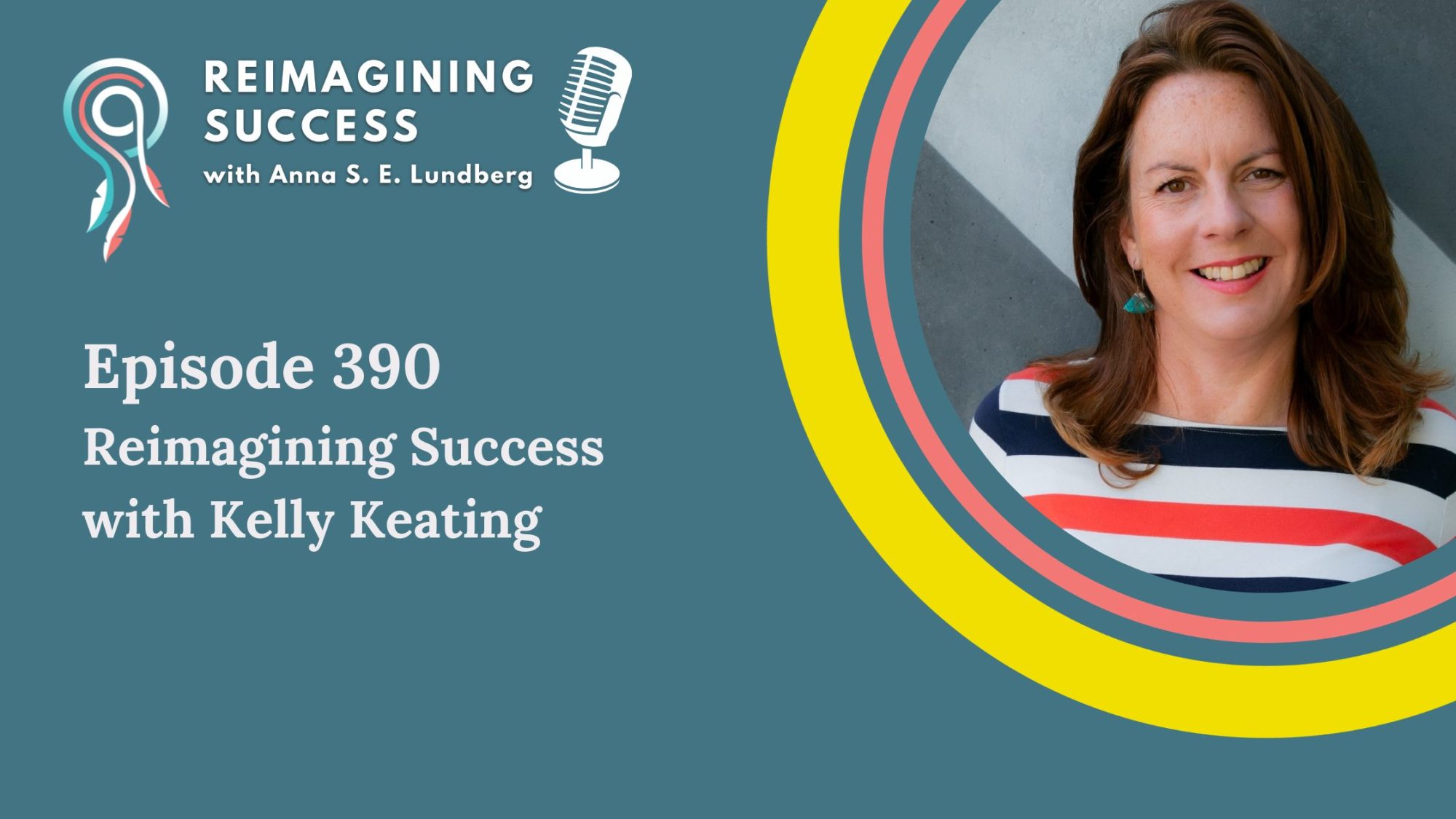
From a senior corporate career to coaching, festivals, and a master’s degree – Kelly Keating’s story is about what happens when you stop letting life happen to you and start designing it deliberately. Anna Lundberg talks with the founder of Wild and Wiser about building a portfolio life after 40, navigating the financial realities of leaving a stable career, and why “enough” looks very different when your values are finally doing the driving.
Key moments
[01:30] Redefining success after 40 – Kelly reflects on how her measures of success shifted after coach training and becoming a mother, and why societal definitions no longer fit
[03:30] Building a business alongside corporate life – how Kelly used flexible working arrangements over eight years to test and build her coaching practice before fully committing
[06:00] The financial realities of leaving – why Kelly encourages people to “do the maths” rather than assume they can’t afford to make the leap
[09:00] When the pain of staying outweighs the risk of going – the personal losses and values conflicts that tipped the balance toward leaving
[11:30] A late ADHD diagnosis and designing work differently – how understanding neurodiversity changed how Kelly structures her business and day
[18:30] The coaching and consulting practice – who Kelly works with, how she balances associate and direct work, and why she loves working with founders
[22:00] Wild and Wiser: a festival by women, for women – the origin story, what makes it different from a retreat or conference, and why she’s launching it
[32:00] Portfolio working in practice – how Kelly balances the festival, coaching, a master’s degree, and family across a typical week
[35:00] Advice for those considering the leap – on flexibility vs. freedom, and why the irony is that she’s working more hours than ever
Key resources
- Wild and Wiser festival – wildandwiser.co.uk
- Book a free call with Anna: onestepoutside.com/call
Wild and Wiser
Anna Lundberg: Hello, everyone, and welcome to this month’s interview. I’m here with Kelly Keating, who I’m thrilled to say is actually not very far from me at all. We’ve met online, we think, but we’ve also since met in person, which is really nice. I’m loving building and becoming part of the community down here in Poole and Bournemouth – there’s a massive entrepreneurial scene with lots of people doing interesting things. So excited to be part of the network with you as well, Kelly. And I want to hand over straight to you and ask you the big million-dollar question: what does success mean to you in this season of your life, and how has that changed over the last few years?
Kelly Keating: Thank you. I really love that question and the framing of “in this season.” So I turned 48 not that long ago and I sort of try and reflect back around when my measures of success did change. It’s hard to say whether it was something around turning 40. I had my son in my late 30s, but most certainly over the last few years that has evolved. If I look back at the moments – I’ve always been quite interested in personal and professional development, but when I did my coach training six years ago you do so much of the kind of introspective work upon yourself, and I think that really amplified the question of: how intentional have I been around what’s got me here? How much of it was my journey and my measure of success versus society’s one, or even maybe parental or school influences? So yes, how I measure success today is definitely very different to how I would have measured it certainly six or seven years ago, but it’s probably still evolving even now. Choice and freedom of how I spend my time, who I spend it with, what my economic engine is and how I get there. But actually, that economic engine can be measuring wealth by time and the company and the environment that I’m in, as much as the money in the bank. I’m really mindful to say that, because we all have constraints in life – we still have a mortgage. When I made some quite significant decisions to leave corporate, that was a big decision for our family because I’d always been the bigger earner. But a little under a year on, it still feels like the right decision, and we’re doing well. Both myself on a personal level and for our whole family, I feel like success is delivering what it needs to be for me right now.
Anna Lundberg: I love that. And that’s so courageous, because I have to admit that when I left corporate over a decade ago, I was single and carefree. I had this tiny little flat that I was renting. I did have to give out my cats, but that was sort of the biggest drama. And I developed allergies anyway. Apart from that, I’m very aware that I had few pressures, and I hadn’t even really hit the pinnacle of my career. I actually opted out in a way before. The pressures and the temptation of staying are so much higher later on – both professionally once you’re established and you have all your stock options and so on, but also once you’ve got the house and the partner and the family. So it’s incredibly courageous to make that decision, but also to make it with intention and choice, as you say. What did you do – were you building your coaching alongside before?
Kelly Keating: Yes, I was. I was fortunate – from when my son was born, my employer at the time put in a flexible work arrangement, and I’d been working a version of part-time, anything from 55% FTE to 90%, over that period – I was there for around eight years. That did enable me to still have a reliable income with all the benefits that come with it, whilst building what my practice was going to be. At the time, that was my coaching business primarily – just all the basics of setting up a business: the foundations, the processes, the systems, the banking, the invoicing, starting to build customers and a profile out there. I highly encourage a lot of people to do that. I think it’s almost a bit of a try-before-you-buy that helps it feel less courageous in a way. And yeah, I still have doubts now. I’m sure many people – friends and family included – are like, why would you do that? But for me, the organisations I tended to be working in, and the more I talk to friends and clients, even those organisations that on the outside might seem better than others have all come with their own constraints and sacrifices. When I’d really let into that work around understanding my values and what I stood for, and really wanting to put my money and my time where my mouth was, I found it too difficult to continue that kind of hamster wheel of, yes, it’s paying me money, but it’s so at odds with how I want to live my life. And actually starting to hurt in many ways – physically as well as emotionally. I appreciate we do have privilege in being able to do that, but equally we’ve had to cut our cloth accordingly and made some huge adjustments. And yet for now, we’re making it work. The adjustments are outweighed by the benefits so far. I don’t underestimate the constraints that many people are under. However, I would get them to really question how much they could sacrifice. In reality, most of us never really sit down and do the maths. I’m a little embarrassed as to how much money I was clearly wasting before. We’ve had to increase the mortgage term and got rid of some things, but it’s like – where was all that money going? Because I really genuinely don’t feel like I’m missing out. I think when we’re in that busy, sometimes unhappy cycle, we reward ourselves with expensive nights out or holidays we don’t necessarily need. Now all of my purchases are from vintage, and I make a point of selling stuff on there too. There are plenty of life hacks possible if we choose to make them. But equally, I appreciate that lots of people like the stability that comes with a more traditional career – and that stability is getting less and less stable now for everyone across all sectors.
Anna Lundberg: There are so many threads and I want to capture a few before we go off down any one of them. In terms of stability, we have these assumptions that we’re safe, and of course that’s not the case – as is very clearly evidenced by redundancies and restructurings, let alone the whole cloud of AI that’s coming. I love what you said about the values piece. You’re living it not just in the work and the choice to leave, but also in the way you’re spending your money. You’re bringing everything more into line with your integrity and your values. And then there’s the trade-off. The way you described it, the pain of staying was actually greater than the risk of going. And that’s when the trade-off isn’t there anymore. As long as you’re being intentional about it – it’s when people aren’t that I get a bit itchy.
Kelly Keating: Absolutely. And I’d already made the decision prior to this happening – about a month or so before – but then my dad died suddenly last year. He was only 70. He lived life a million miles an hour; that’s probably something to do with why he’s no longer here at a relatively young age. And that, as well – those types of things happen, and it happens to friends and peers of our own age. I know it’s clichéd, and I think probably lots of people at my last company thought maybe that was where I’d left. But the decision had been made prior to that. It was a real kick up the bum to say, yes, this is right. What do we want to do with our one precious life? I want to make sure that my second season is much more intentional, much more living the life I want to live and having the impact on the world that I want to have. The freedom – along with all sorts of uncertainties and bumps – of truly being able to pick, whether that’s working for a non-profit or a B Corp or something that feels more aligned. And when it’s truly your own, you can only disagree with yourself. You can build something really aligned to your values and beliefs.
Anna Lundberg: I’m becoming so aware of my own mortality. It’s the age and it’s quite morbid, but sometimes it does take a few realisations like that – health issues, deaths, and sadly quite tragic circumstances – to remind us. Now that you’re past the beginner stage and obviously made the decision, what are the challenges you face in the next phase? No longer the beginner problems, but more like the sustaining, the growing, where do I go next?
Kelly Keating: One of my biggest challenges is probably that I always try to overextend and want to do too much. I got a late ADHD diagnosis about three years ago. My dad was very ADHD – on the spectrum, flying off the end, whereas I’m probably a little bit more considered. You manage and find coping mechanisms over 48 years. But yes, the challenge for me as a solo entrepreneur is not overextending, because if you’re not fit and well and working, you’re not earning and you’re not moving forward. I think, obviously just the same as everyone, there’s a turbulent geopolitical market. If I look at both sides of my business – the coaching and consulting, where budgets for development and team development are the first to go, and then the festival, which is a nice-to-have rather than a need-to-have. When families are considering mortgage rates going up and there’s uncertainty, you think twice about spending a couple of hundred pounds on a festival ticket. I’m not looking to replicate a salary or build the next big business, but I do want to build something that is valuable – both for my clients and for myself. I’d almost question whether I am still in that beginner phase, in as much as I’m really doing it seriously, because before it was so fractional. And actually – I reflected on this earlier – one of the other big decisions I made in the last few months was starting a master’s. I always felt a little uncomfortable about MBAs when colleagues were doing them, especially when nearly all of them said, oh yeah, this is great but I’m never going to be able to apply this in reality in this place. I didn’t go to university either. I went to a local grammar school but didn’t finish my A-levels, so the idea of studying academically just didn’t seem achievable. But something popped up in my socials, and the language and tone around what the course was and who it was for really appealed to me. So I started a master’s in creative practice – very practical, but also very reflective. My first module was due in this morning and it was a reflective practice piece. I find that really helpful, because my natural propensity is just to keep moving forward. This is actually helping me to pause and reflect. And that’s a practice I can apply beyond the master’s, both with the festival and the coaching business.
Anna Lundberg: What’s a nice part of working for yourself is that you have your own L&D budget – you can choose that. And as you said, in a way we’re all beginners, because of the turbulence around us and because AI has now changed things. There’s so much more noise and different market conditions than when I started ten years ago. Your diagnosis is interesting too, because we’re seeing more and more neurodivergent individuals leaving corporate because it isn’t fitting them, and then taking themselves with them into their own business. It’s just then about designing it in a way that works for you, and being kind to yourself about it. Leaving the job isn’t going to take away everything we were struggling with before.
Kelly Keating: No, for sure. And I’ve gone down plenty of rabbit holes on this because I do quite a bit with founders and entrepreneurs. There are varying stats out there that say anywhere between 25 to 40 percent of founders and entrepreneurs are neurodiverse. And of my master’s creative group, if you add in the creative element, a high proportion of us are neurodiverse. In a way, I think that maybe did give me the courage – the risk tolerance – to think, let’s give it a go. I’m not one to talk about superpowers, but understanding your strengths and your blind spots – particularly with the neurodiversity angle – is important. And getting out into the world is another learning. I have a cosy office setup here and a lot of my client work is virtual, and you can be busy and interacting most of the day. But what I’ve found is that when you go out into the wild – whether it’s dropping into a co-working space, an event, or just meeting people in real life – that really does provide support you don’t get virtually. I’ve needed to force myself out and about. And equally, I’m pretty certain that without AI I wouldn’t have had the courage to start Wild and Wiser. It’s been an enormous enabler for a solo entrepreneur with a limited budget – the speed to be able to do stuff, the support in learning all the different tools and systems.
Anna Lundberg: It’s incredible, especially for solopreneurs. As much as we battle with what’s authentic and so on, it’s just absolutely mind-blowing what’s possible. But we’ve danced around it a little – I want to hear more. We haven’t really talked about what you do, so tell us about the coaching and consulting, and then we’ll talk about your festival.
Kelly Keating: So Kelly Keating Coaching – I noticed during my coach training six years ago that a lot of my cohort were spending so much time deliberating what to call their company, so I just cracked on and used my name. Primarily I work with senior leaders, founders, and execs in one-to-one leadership coaching – being their thinking partner and sounding board when they’re going through times of transition or change. Sometimes that has a career element around pivoting or getting promoted, but more often than not it is that sounding board and thinking partner role. I also love working with teams – things like health checks where there’s a little bit of dysfunction or opportunity for greater performance, partnering with them ideally over a number of months. I also do strategy away days. And the freelance gig I mentioned is with a brilliant organisation called Business Leader – they exist with a mission to double the size of large businesses in the UK, through founder forums, peer-to-peer coaching, and access to some really brilliant masterclasses including under-the-bonnet sessions at different very established organisations. I love that. It’s very different from spending most of a career in larger, more bureaucratic corporates. Being in the room with founders of growing businesses – the grit and the energy is really different. And then the new endeavour that emerged last summer was when I first had the idea for Wild and Wiser. It’s a combination of everything that’s got me to here in my life. I’ve worked with women personally and professionally for decades. With a couple of former colleagues from the RNLI, I’ve been co-host and facilitator of a group called Aspiring Women, which my good friend Marie Smith set up over 15 years ago. Through that, I’ve met dozens of brilliant women and experts on everything from menopause to mindfulness to public speaking. Then last summer I was invited to a women-in-business day on a boat in the harbour, and it was just a wonderful day. Fourteen of us, generally more senior in our careers, and we all said how infrequent it is that we get the opportunity to connect with similar women in business. My husband and I also got married last year – we love music festivals – and we came across a beautiful location called Wooders on the outskirts of the Wareham Forest, owned and run by a brilliant woman called Heidi whose brothers didn’t want to take over the farm, so she did. All of that culminated in the concept of Wild and Wiser – a festival by women, for women, combining wellness, creativity, and personal and professional development. It’s not a retreat, it’s not a festival, it’s not a conference, but hopefully it’s combining all three. It’s happening on the 19th and 20th of September. I’ve got over 20 different speakers and practitioners, a female founders marketplace, and I’ve been really bowled over by the support I’ve received.
Anna Lundberg: I am so in awe, because I don’t come from an events background at all. I organised a dinner earlier this week and that was already a lot of logistics. And I’m really feeling this pull towards more in-real-life connection, especially with women. I also love how you’re demonstrating that you have the core of your work as the income generator, and you can make space – thanks perhaps to AI and your network – for a passion project that hopefully can take on a life of its own. Obviously it’s hard to make an event like that a money-maker right away.
Kelly Keating: Absolutely. When I was still earning full time, I never took any money out of my business. So whilst I wasn’t earning a huge amount because it was so part-time, I only ever reinvested in training or things in the business. So I had a pot there that I was willing to gamble. I listened to a podcast recently with a couple of established festival founders and they said it generally takes seven years for a festival to be profitable. So I’m realistic whilst at the same time optimistic. You’ve got to believe in it, you’ve got to be a little bit naive and idealistic, and not be too crushed when it’s hard. Worst case scenario, it would just be a bloody expensive party – like another wedding.
Anna Lundberg: Well, congratulations on that, by the way. And making an intentional choice that you still want to be together after those years is a mark of success in itself. So what does a typical week look like for you?
Kelly Keating: That’s a great question and I probably need to get more structured around it, but doing the master’s has given me some structure because there’s a session every Thursday. I also tend to join a couple of huddles each week – they have two a day – which are basically accountability sessions where everyone on the master’s shares the one thing they’re going to get done that day. I really like that from a community element as much as accountability. The rest of the week is a blend of one-to-one coaching – mostly virtual – and I don’t have any more than maybe a dozen sessions a week, partly wanting quality over quantity but also because you spend equally as much time on business development as on coaching. I do the Business Leader forums once a month, which generally involves going to London. I do a fair amount of networking, still exploring more locally since my career has tended to be more London-focused. And then there’s an awful lot of admin to do with Wild and Wiser – everything from marketing collateral to the website to keeping in contact with the newsletter. I’ve had some materials printed, I was at the Big Swim on Saturday, and I’ve got a few days planned literally walking the streets and talking to businesses – asking them to put up posters. There’s something really real about having a conversation with someone in front of you. It takes more time and effort but I think it’s more rewarding. People still buy from people. And also the associate coaching work. At the moment, because I’m really busy with Wild and Wiser, I’m happy to take on associate work – it’s less paid but it literally falls into your lap, without all the business development and admin. The mix of associate to direct work feels right for where I am right now, because in reality Wild and Wiser is probably taking up two-thirds of my time.
Anna Lundberg: That’s exactly it – we started by talking about seasons, and this is a season where you’ve got this big festival that you’re focusing on. And it’s great to make those choices. The first time around you’re learning so much, and hopefully the second time will be easier. What about holidays and time off?
Kelly Keating: When I was at a significantly large employer I was known as a huge flexible working advocate. After coming back from having my son, I went from being a complete workaholic to needing very clear boundaries. I led a team to bring in job sharing – enabling two people to both work part-time but still giving the business coverage. A lot of people might assume my reason to go self-employed was to give me flexibility, but actually it’s the freedom and the variety that’s more important to me. The irony is I’m probably working more hours than I’ve ever worked. My intention is to take the majority of school holidays off. My son loves football camp a couple of days a week in the holidays, so I tend to be able to adapt it – get a decent amount of time with him while he’s still young enough to want to spend it with me, and then get back a couple of days to the business when he’s at camp. Last summer I took the majority of the summer off – I kept a few associate clients but really did have most of it off. We spent a lot of time on the beach, and that is priceless going back to your first question about success. You won’t get that time back. Being able to do it and really enjoy it was a gift.
Anna Lundberg: Absolutely. Well, with that, I want to leave it there. Where can we find out more about your festival?
Kelly Keating: If you go to wildandwiser.co.uk, all the information is on there about our amazing collectives, all our different speakers and practitioners. We’ve got a female founders marketplace for both product and makers and female-led businesses, so if any of your listeners are into that, do please let me know. Tickets are on sale at the moment – my early-bird, or as I’m calling them, dawn release tickets, are still available. If you’re curious in any way, please do check it out and sign up to the newsletter. And tell all your friends – as a first-time founder I’m going to be really reliant on networks and conversations like this to get the message out there.
Anna Lundberg: It does sound like you have a network of supportive people, so that’s great. So exciting that you’re doing it. Well done for taking the leap, and I’m excited to see how it goes.
Kelly Keating: Thank you for supporting me and inviting me on – I really appreciate this. It’s been a really fun conversation to have.
Anna Lundberg: Thank you so much. Both of us have struggled through a cold today, who would have thought it – so we’ve done very well to get through here. Thanks so much Kelly, best of luck with the festival and see you around Poole.
Kelly Keating: Perfect, thank you. Take care, Anna.
1:1 Coaching & Mentoring
For experienced founders and independents who want a trusted thinking partner – not a programme or a group, but direct, personalised work at the level you’re actually operating at. Anna works with a very small number of clients at any one time.


