
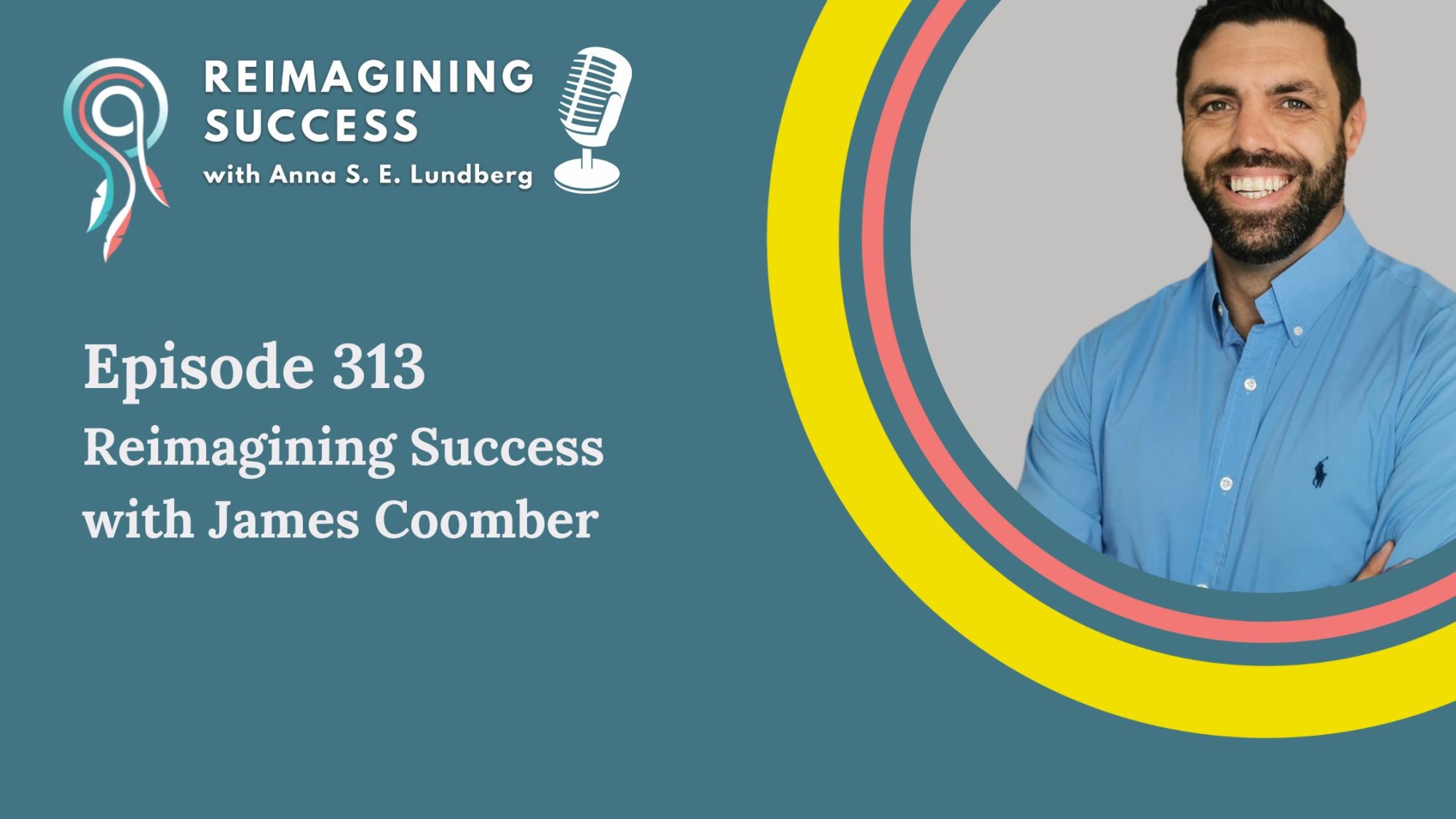


 In this month’s interview, Anna has a candid conversation with James Coomber, a former leader in the UK Fire and Rescue Service who has transitioned to a career as a leadership coach.
In this episode, James shares his compelling journey of overcoming self-doubt and finding validation in entrepreneurship through the support of like-minded individuals and the inspiring book ‘Start with Why’ by Simon Sinek. He discusses the significant shift in his life from chasing professional milestones and material possessions to prioritising happiness, health, and spending quality time with his family.
Anna echoes his experiences, reflecting on the often-overlooked power of community, external validation, and the challenges of measuring more nuanced goals like personal growth and being present. Together, they explore how the pandemic has prompted a shift towards greater work-life balance, especially for parents, and the critical role of setting flexible yet firm boundaries.
They also discuss the evolving landscape of business growth, personal branding, and the necessity of building genuine relationships over relying heavily on platforms like LinkedIn. James offers valuable insights into maintaining authenticity in business, the importance of psychological safety, and the art of having difficult conversations.
Join us as we unpack these themes and more, offering valuable insights into finding fulfilment and redefining success in today’s world. Don’t miss this episode as Anna and James provide a wealth of wisdom based on their personal and professional experiences.
*Resources mentioned during the episode*
1:1 Coaching & Mentoring – If you’re looking for one-to-one support to help you achieve your specific life and business goals, Anna has a limited number of spots for individual coaching and mentoring. www.onestepoutside.com/coaching
Authentic leadership
Anna Lundberg:
Okay. Hello, everyone, and welcome to this month’s interview. I’m here with James Coomber and as is often the case, we haven’t actually met in person. I think this is even our first call, James. But we met via a thought leaders community. I was looking for people in this group in the UK and I found James and his friend Chris. So we’ve since been messaging for some months with similar goals in our business. It’s always really useful to have that community and to have people who are going through similar things.
Anna Lundberg:
So I’m really selfishly interested in hearing more about your story, James. So, first of all, welcome, and can you tell us what were you doing before and what are you doing today?
James Coomber:
Absolutely. Thank you so much for having me on your podcast as well, Anna. So, yes, my whole background, I spent 20 years working in the UK Fire and rescue service and I progressed up the ranks to sort of like a middle manager kind of level. And last year, May of last year, 2023, I decided that it was time to move on and do something new. So I’m now doing my thing, which is I’m working as a leadership coach and I’m helping people grow in confidence, becoming themselves as authentic leaders in their workplace.
Anna Lundberg:
I love that. Beautifully articulated. And, you know, I’ve been in this kind of space for a while and to me that transition makes perfect sense. But perhaps it wasn’t so obvious for you. So I’d love to hear, how did you make that decision? You said it was time for a change, but there’s still a big. It’s a big move to sort of draw a line through decades of work and do something completely different. So talk us through that process.
James Coomber:
Well, it was an interesting, interesting one. I mean, there was a few reasons for why I left the fire and rescue service, and for me, one of them was I felt. I felt like I was at a dead end role, if you like, within the organisation. I had done various roles up to that point. I spent a lot of time working on operational fire stations as both a firefighter and a fire officer, going to lots of different incidents, as I’m sure you could imagine, and then went off and did a lot of time working in training and helping other people. And then in final role that I did was working in national operational guidance. It won’t mean much to many people, but it sounds boring and I can tell you it is boring. It was a lot of excel spreadsheets and doing strategic analysis on things that were going on.
James Coomber:
And for me, the next natural progression was about going up through the next couple of ranks, which kind of gets quite political in the fire and rescue service. And I just knew that I didn’t want to do that. And I think this is why I ended up doing a varied career in my last kind of eight years, is that I was looking for job enrichment in what I was doing, rather than job progression up through the ranks. And I kind of exhausted that element of it. So the decision came to move and do something else. One of the things that really, really fascinated me in the fire and rescue service was leadership. The topic of leadership, and also an element of culture, because I think actually, leadership and culture go hand in hand with each other. Now, going back to my time in the fire and rescue service, most fire services want to have a community with a lot of diversity in amongst it.
James Coomber:
And I quite like to use the. The analogy of colours and shapes. You know, we like to have lots of different colours and lots of different shapes of people that work within our organisations. So we like blue squares, orange circles, yellow triangles, red rectangles, all the different colours and all the different shapes. This is the diversity that we want. However, as you start to progress within the organisation, fires like this, the police, ambulance and many other workplaces are very similar. There’s this element of conformity, of trying to kind of fit in and be a bit of a blue square as you go up through the ranks, if you can kind of imagine that. And I was very much a yellow triangle in amongst the blue squares at the rank that I was at.
James Coomber:
And I just felt like I was starting to lose a level of authenticity as to who I was. And if I wanted to progress as much as I didn’t want to lose that authenticity, it was kind of an obvious move, is that I needed to adapt and change a little bit. And that meant sacrificing some of the core values and beliefs that I had in what I believed a leader should be and what a leader should be about. And again, that was another kind of arching reason for me leaving, was that I felt, actually, if I was to go on and do my thing, I could be 100% authentic and who I am and I could spread that message. Now, I joined the fire and rescue service to help people. That’s the whole thing. And if you ask almost any firefighter out there, why did you join the fire service? They’ll tell you the same. They do it to help people.
James Coomber:
You want to be that person that’s there to help someone in their moment of crisis, so that their life gets better off the back of it. My mission in life hasn’t changed. I still want to help people and I do it now in my leadership practise, but in a slightly different way to how I did it before, because I genuinely believe that leaders, really, really good, authentic leaders, the ability and have the power to change people’s lives for the better. And I saw that in the career that I did. So it’s a long winded way around why I left the fire and rescue service and ended up doing what I’m doing now. But, yeah, that is ultimately it. I wanted to do my own thing and I wanted to continue helping people and now I do it in a way where I love what I do and I can be really authentic in the way that I do it too.
Anna Lundberg:
I love that. And it’s not long winded at all. And I think there are so many interesting elements to that. And the first one, as you said, that’s such a great way of putting it, that you can kind of enrich your role. And I did the same in a much sort of shorter time span. I kind of knew I wanted to leave my corporate job in that case, and I just took kind of every training I could possibly take. So it was a bit more selfishly driven, but I was trying to learn and diversify and see what else could take my interest, rather than just progressing linearly. And I think that’s a really interesting way of looking at careers, because, as you say, generally in an organisation, the way you progress is by going up, it’s by managing more people, it’s going a certain direction.
Anna Lundberg:
So the fact that you can look at, and there’s an organisation called squiggly careers that look at this, it’s not just this linear ladder. And then secondly, again, similar experience actually looking up at leaders in my organisation, there was a certain conformity at the time. I think the really nice thing is, and I’m sure that’s why you’re getting a lot of work and I work in a not dissimilar space as well, this idea of authentic leadership is really taking off now. Diversity inclusion is so, so important and we need to allow that to thrive and flourish and not then at a certain level, you suddenly go, oh, well, there’s no women here and there are no yellow triangles, and we just kind of become this, this blue square, whatever it is. So I think that’s a really interesting perspective. You sort of answered that in talking about your mission of helping others. But when you started your career, how did you, as a young, you know, firefighter how did you view success then? And how has that changed? How you look at it now? As a recently wed mid career gentleman?
James Coomber:
Thank you. Mid career is a nice way of putting it. You’re getting older, James, isn’t it?
Anna Lundberg:
I was trying to find some knife first. That was a very strange way of putting it, but there you go. I’ll practise that better for another time.
James Coomber:
This is a really good point, I think, earlier on in my career, and I think lots of people look at this in a very similar fashion, really. I saw success about going through this training course, progressing, passing tests and exceeding at those tests, so that I was getting the highest marks in what I could possibly do. Impressing upon other people all the time was another thing of where I saw success. Constantly trying to show someone else that I was really good at what I did. As that moved on, certainly within the fire and rescue service promotion, because it’s quite a hierarchical command and control organisation, progression was almost status. So whenever you got promoted, you kind of like went up the. Went up the ladder and you gained that status. And actually, the more you went up and you’re looking at your chief fire officers and your assistant chiefs and you’re going, that’s success.
James Coomber:
It’s those people that are at the top of the triangle or the pyramid, that’s what success looks like. Then you’ve got the materialistic things, you know. Now I’ve had a pay rise, now I’ve got a pay rise. I want to get myself a bigger house, I want to have a really nice car, I want to have a shiny phone and all of those things. It’s materialistic stuff. And as time has progressed, my perception on what I view success to be is very different. It’s about happiness, it’s about being healthy, it’s about having balance in your life. I go back probably five or six years ago when I was working in the training department within the service and an average week for me consisted of around.
James Coomber:
It varied between 70 and 90 hours a week. Very early starts in the morning, quite often that early start at 06:00 a.m. would go on to maybe half past 910 o’clock at night. I’d get home, emails are on my phone. I was receiving hundreds of emails week in, week out, whilst managing a team of people that were really, really good people. But obviously there’s the issues that arise every now and then from having large teams and then you just kind of think, gosh, is this it? Is this life? I literally wake up to work. I had enough money coming in to pay all the bills and get all of the things that I wanted to, but I wasn’t living. I was literally living to work, not working to live.
James Coomber:
And this is where I’m at now. This is my kind of definition of where I see success, balance in life. So now I work from home. I don’t want to work your 42 hours a week, which is like the average for most people here in the UK. I want to work the hours that I want to work. Excuse me. Sometimes it might be that I do 50 hours a week, sometimes I might do 20, but it’s suitable to me, you know, next week I want to go away and spend a few days away with family and friends. I’m going to go and do that because that’s part of my balance in my life.
James Coomber:
This is where I see success now. Yeah. Being happy, being healthy and just really, like, looking after myself and spreading myself out so that I’ve got that enriched life that I wanted. Not an enriched work life, an enriched life, which includes work as well. Does that make sense?
Anna Lundberg:
Definitely does. And you’re speaking my language. I think it’s a really stark illustration. It seems so simple, but before it’s very black and white, it’s the, as you say, the ticking, the boxes, getting the. I talk about the gold star or the grade and excelling, and it’s also very external, externally focused, externally validated, and it becomes much more subtle and nuanced. Now, I feel it’s more about being present, whether you’re with your family or in your work, and as you said, being healthy. And that sounds so obvious but so important and sometimes taken for granted, of course. And I think it’s harder to measure that.
Anna Lundberg:
Right. It’s harder. Sometimes I’m the last year or so, after a decade of working for myself, now the goals are not as clear on the board of, oh, I want to publish my first book, well, I’ve done that, or I want to move to and I’ve kind of lived there. So then it’s no longer the big, sexy goals. It’s more about, oh, how can I become better at this? How can I be more present with the children? How can I get fitter? How can I. Yes, of course, earn more money and make a bigger impact, but it’s what I feel is important rather than, as you say, it’s not this clear. Right. Next level is now it’s the six figure, seven figure, eight figure.
Anna Lundberg:
I imagine some people do that, but for me it’s much more subtle and that makes it harder, I think, to measure and to sort of reward yourself along the way. I don’t know what you think about that.
James Coomber:
Oh, totally. And you just said something there as well, which really resonated with me, and it’s about being present and spending the time that you want with your children and things. When it comes to our final day of taking our last breath, our children won’t remember how much money we earn over the years. They’ll remember the day you took them to the beach, they’ll remember the time you took them to the swimming pool when you had the best time ever. They’ll remember the time that you took them on that holiday to Spain or wherever it might be. That’s what they remember, you know, and I’m certainly at that age in my life now as well, where my children are nine and twelve at the moment, and I want to be present. I want to be there with them. I mean, my twelve year old, he’s growing up quickly and it’s only, you know, I’m probably getting my last kind of months or years with him as a child that wants to do stuff with his dad.
James Coomber:
And we got to remember that sometimes our kids, they’re, they’re going to be around for a long time, and only a small percentage of that time are they going to spend being these little people that are dependent on us. And that’s such a precious moment to have in life. They don’t want to remember that their dad spent 90 hours at work each week. And when he came home, he was so miserable that they didn’t want to approach him. They want to remember the fun dad that did all these really great, wonderful things again. That’s part of the transition, isn’t it? And I think you’ve probably experienced exactly the same thing. Am I right, Anna?
Anna Lundberg:
Yeah, absolutely. And I talk to a lot of the parents at school. My kids are younger, they’re three and five. But even, in fact, one of my mum friends has a daughter who’s two years older. She has noticed a difference in the number of dads picking up kids from school, and I sort of just took it for granted. But I do think the pandemic had a big part to play there. And lots of dads have either left their jobs or they’re just more flexible now. They’re not commuting into London and so on, and they are just totally rethinking everything.
Anna Lundberg:
I think once you’ve had a taste of that, it’s very hard to go back. And luckily, many employers are waking up to this and hopefully creating work environments that kind of work with that flexibility and so on. And we’re also lucky, I suppose, that we are at a seniority where we are able to sort of, we built our brand, we’ve paid our dues and so on. But, yeah, absolutely. I mean, that flexibility and being present is everything. But again, it’s not something you kind of. Well, you could put on a vision board, but it’s not something I put on LinkedIn. Oh, I’m really thrilled to say that I was present with my children this weekend.
Anna Lundberg:
It’s not the kind of thing that society and followers are going to applaud me for, sadly, but it’s what matters to me. So it becomes a much more introspective success, I think, as well. And what have been the challenges for you in the last year or so, would you say? And sort of making that decision, it all sounds very streamlined and smooth sailing for you. So what have been the doubts or the questions in your mind along the way?
James Coomber:
Great question. I mean, it’s never smooth and plain sailing. As you know, life in entrepreneurship is far from that, but this is the kind of image that we portray, and I think it’s really great to talk about the vulnerable sides of it as well. My first real challenge that I had was self belief, believe it or not, being a yellow triangle amongst blue squares. I was told an awful lot in my last kind of like ten years or so in management and leadership within the fire service that I was doing things differently to other people. So for me, it was around trying to believe in myself a little bit more as I move forward, believing in the skillset that I’ve got. And actually, I found that the biggest way that I was able to overcome that was to seek validation from other people. Not just any people, but people that really believed in me.
James Coomber:
And seeking that validation from them has really helped me grow in my kind of confidence level around that area. So now when I’m speaking to people, I’m absolutely. I believe what I’m doing. I believe what I’m teaching because so many people have said, this is great, this is what you’re doing. And I truly believe in that. Cut the negativity out of your life, because there will be many people that challenge you with what you’re doing. Another thing that I turned back to, there was a book that I read many years ago, and this guy’s a. He’s kind of a role model for me, a famous role model.
James Coomber:
Simon Sinek, if you’ve heard of him. Does the whole kind of like, you know, start with why leaders eat last. He talks about servant leadership a lot in his book, and that was absolutely my style of leadership through the fire service. And reading his book back through again was another thing that gave me that belief of going, do you know what he’s talking about? The style of leadership here that really works. And that was what I was. I was always the guy that ate last, you know, and that that in itself has helped me overcome. One of the biggest struggles that I’ve had is the self belief side of things. Another thing that’s really helped me is finding time for me with my health and my own well being.
James Coomber:
Getting up early in the morning, going into the gym and just doing. I mean, sometimes I really look forward to going to the gym, other times I detest it and I cannot stand the fact that I’m doing it. And I think, why am I doing this? But it’s a great motivator and a great start to the day. I mean, I don’t go in every single day, but, you know, I go in two, three times a week and that’s a great motivator for me, which has helped me immensely moving forward. What other barriers have I had? Gosh, what else could there be? I think knowing where to start. When I worked in the fire service for 20 years, people told me what I had to do and the kind of like the mission statement, the goals were laid out by the organisation and you kind of went, okay, well, I’ve got to work with that, so at least I’ve got a start in place. When you’re working by yourself, it’s so difficult to know where to start, especially when you are doing something quite different to what you’ve done before. So that was a really, really tough thing for me.
James Coomber:
And again, surrounding myself with the right people and I was actively going out there trying to seek people that have either done what I’ve done or are working in that space that I kind of want to work in as well. And I found that there were so many people that were forthcoming with guidance, with advice on what to do, and we actually ended up landing on. On pretty much the same thing, which was thought leadership programme. And that thought leadership programme really helped give me some clarity and some guidance on where I wanted to go and how to lay that out. I was literally in the clouds at times where I would be posting every single day on LinkedIn going, how come clients aren’t coming in? You know, it was trying all these different things out, but especially the posting on LinkedIn. I very quickly learned, actually, that LinkedIn isn’t always full of the people you want to work with. Quite a lot of the time, the people on LinkedIn are the people that want you to follow them. Does that make sense? Yeah, that’s certainly been my experience with it.
James Coomber:
Every single day we get inboxes, people in our inboxes going, come and follow me and asking you questions about, are you struggling with this? If you want some help with marketing, I can help with that. So I very quickly realised that that’s actually, I’ve got some clients on LinkedIn. That’s not where I need to be spending all of my time and my bit of my business and actually thought leadership, speaking to real people, doing this for real, have kind of guided me really nicely through where I need to be at the moment. And you’ve actually been a big part of that as well. Anna, in our little thought leadership group that we’ve created, it’s been really, really helpful sharing the wins and the losses that we’ve had over time. It’s been really, really useful.
Anna Lundberg:
And I think what I mean, I’m further along in the journey, and I sort of wish I’d landed in these kinds of communities earlier on, but perhaps it’s a useful process to still go through. But I think that external validation you talk about is so powerful. And you see, I don’t know if you’re active on Facebook and Instagram or so, and you just get a lot in the business coaching space, especially, you get all these gurus telling you you’ve got to do this, you shouldn’t do that. And I tell people still, now I see that, and it’s very well written because it’s so compelling. Oh, this guy must know some secret that I don’t know. And I’m going to now find this out. I’m going to pay them 10,000 and then they’ll tell me the secret and Tada. My business will suddenly flourish.
Anna Lundberg:
And I think the power in the communities that we’re talking about now is rather like minded, smart people who are finding the answers. And yes, there can be shortcuts and strategies and learning and experiences, but that kind of community, and it’s something I’m trying to build for my clients as well, is so much more powerful and empowering and in a way more sort of in line with your servant leadership and authenticity. It’s not about everyone becoming those blue squares, and I’m totally stealing that from you, but it’s much more about finding what works for you and your lifestyle aspirations and your family situation and so on. The self belief one’s an interesting one because, yeah, the external validation is so powerful, isn’t it? We need other people to tell us and hold a mirror up and say, no, no, you are good at what you do, and yet we need to not be dependent on that. So I think getting that balance right is really tricky. But I think definitely when you’re starting out and obviously having people tell you that, yeah, this is really helpful, can be a really great start to go, okay, I’m not making that up. And having other people, like Simon Sinek or someone having a theory, having a framework that very much is consistent and coherent with what you’re doing, it’s like, okay, just because the people around me in my little bubble weren’t sort of following that kind of model doesn’t mean it’s not the right one. But let’s dig into that a little bit more then sort of, what is your business model now? Who do you work with? How do you make money? If you don’t mind us putting advocates and what’s your business?
James Coomber:
How do I make money? Well, I wish I was earning more, but this will come. This is certainly coming as time moves on. Definitely my business model again, it’s going back to that thought leadership practise. I’ve got ideas in my mind of what I wish to do, what I want to do. I focus my kind of efforts in three key areas, are three areas which I felt for the last 20 years of my time in the fire service that I really did quite well in. The first one is around male allyship and how men can be big supporters to women in the workplace, as opposed to being the problem and the barrier. Quite oftenly it’s an unconscious problem and barrier. People don’t realise they’re part of a problem.
James Coomber:
So that’s one area where I like to work. Another one’s around psychological safety and just having really good environments, healthy environments where people can just be themselves and kind of, you know, come out from themselves and just perform, you know, well. So I like exploring psychological safety and the other one is around having difficult conversations with people. This is something historically I’ve seen. There’s been a real big problem, certainly in the areas where I’ve worked and explored since, that people don’t know how to have challenging, courageous, difficult conversations with people at work. So they’ll do one of two things. They’ll either have a go at it and get it drastically wrong, or do nothing at all, and then we see problems get worse and worse and worse. So they’re kind of the three key areas that I like to work in.
James Coomber:
My business model is around picking one of these topics, looking at the style of how I’m going to deliver that message. So let’s pick difficult conversations as an example. I’ve got difficult conversations as my message out there, the market that I’d go to, emergency services. I’ve got a great cohort of people that already follow me and look at what I do in and around the emergency services in this country and in other countries as well. Now, my method of how I want to get my message across to them varies. So I might pick coaching one day. I might pick mentoring, delivering physical training to people, delivering online training. And at the moment my latest cluster, and you know what I mean when I’m talking about clusters, is looking at writing a book.
James Coomber:
So this is something that’s quite a new thing for me. So my business model adapts and changes as I move forward and that’s just as information comes in, as I try things, things that work, I keep doing things that don’t work, I drop and I move forward. And again, like, you know, Anna, you’re very familiar with the thought leadership process, where every three months you look at one of these clusters of picking your message, your market and the method of how you’re going to deliver that, trying it out for a few months. If it works, great, keep it. If it doesn’t have, move forward and do something differently. So I’ve had some wins with this and I’ve had some losses with this as well. And I’d actually be really interested to hear how things have gone for you on this one too, Anna. So for me, straight away, the difficult conversation, emergency services in the one to one coaching arena has worked really well for me.
James Coomber:
And I tend to pick up my business from that through referrals, word of mouth. Sometimes it’ll be that I do a free webinar that lasts for maybe 30 to 45 minutes that people then join off the back of that as well. So I get some income coming back through from there. One that absolutely flopped for me. So it actually started off with, I talk about male allyship. My very first one was around talking about toxic masculinity. So I was focusing in on toxic masculinity in the emergency services sector, in the training forum. Everywhere I went I was getting barrier after barrier after barrier.
James Coomber:
And the reason for this is the majority of the people that I was speaking to were males. And the second you say I want to come in and I want to talk to you about toxic men causing problems in the workplace. You can imagine that the war was up straight away, so I’ve had to adapt to and change and learn from that. I quite like using this accept process, move forward. This is the APM method for me. So when something’s failed, when something’s not worked very well, accept it. You know, it is what it is. I hate that saying, but it is what it is.
James Coomber:
Accept that what has happened has happened. I keep losing business because of whatever reason, because I’m talking about toxic masculinity process. So now let’s start to process it. Why am I losing this business? Why are things going wrong for me then? Once I’ve done my processing, now it’s about planning and moving forward. It ultimately falls in line with that whole. There was the famous quote, is it failure is the first form of success or something like that? I can’t remember Colin Powell or someone says something around that, didn’t they? And I absolutely believe in failure being part of you growing, learning and moving forward and building up from it. So that’s where I learned from that one and have moved forward with doing things around male allyship and speaking. I spoke at several events around male allyship, both on International Men’s Day, International Women’s Day.
James Coomber:
And it’s been a really, really good thing. And it gets an awful lot of attention because instead of men being the problem, men are part of the solution, you know? And actually, when you start talking to men about how can you be part of the solution? Things change. The mindset has changed straight away. So there we go. There’s an example for me. Anna, can I ask you, though, what successes and what failures have you had in the cluster process through the thought leadership stuff?
Anna Lundberg:
Yeah, I’d love to pick up on a couple of things you said as well. So I’ll try to put a pin in those and not forget those as well around. Well, first of all, let’s do that because otherwise I’ll lose the thread. I think my brain is not capable of holding so many. Yeah. And I think the lesson for everybody listening to extrapolate out as well, whether they’re following this model or not, is this positioning, as you said, going from toxic masculinity to male allyship? You know, if I’m talking to business owners saying, hey, are you really bad at running your business? Are you not making any money? And so on? Right. That’s, nobody’s going to self identify as that. You don’t want to hold your hand up and say, yes, I failed.
Anna Lundberg:
I’m really bad at what I do and please can you help me? So just thinking through, hang on a second, how are they going to articulate the problems? And how can you allow people to self identify without having sort of a sense of shame or blame? Sometimes I think when you’re working with companies as well, if you say, hey, I want to fix this problem, or your leaders, your HR isn’t working, no one’s going to want to go to their boss and say, hey, I want to pay someone because I’m not good at my job. It’s not a helpful thing. It might even have been in the thought leaders training where he mentioned, know, let’s say somebody watches something illicit on their travel, work, travel in the hotel, they don’t really want that appearing on the bill. Right. So it’s kind of the, you don’t want to be paying for something that doesn’t make you look good, I suppose. So that’s one lesson. And then the failure, I think, is very interesting because for me, because I’ve been. I sound like it’s sort of old and stayed in this for so long and it has pivoted along the way because initially I did consulting sort of for big companies and then I travelled in between and then I did coaching and sort of travelling while I was doing that, the digital nomad thing, and then I kind of fell back a bit more into the nine to five then.
Anna Lundberg:
Now I’m going a bit back to corporate. So whether you call them failures or evolutions of the business model, I suppose I’ve been experimenting and changing more than I realise. And yet once you have the established business model of the website, the company name, and you’ve done the strategy and you’ve got the programmes, I can tell you. So come back to me in ten years, time and time. It’s much harder to then see sort of fail and move forwards, because failure then, even if it’s intentional, is, oh, which I have done. And I’ll tell you that I removed my digital marketing consultancy domain name. I no longer pay for that. I held onto it for a long time, the website, all that stuff.
Anna Lundberg:
Right. And that’s a bigger decision, it feels, once you’ve got that established piece, the model of trying every three months, and hey, I’m just going to try this message, talk to people, feels a much lighter way to try things and fail, rather than as perhaps we often think we need to have all the stuff, like, of course, it’s amazing to have a book once you land on a topic that’s really powerful. And yes, a website can be useful and so on, but I think the failures are easier to suffer through if it’s just like, oh, well, this is my approach. I’m testing learning that didn’t work. I’m going to do this. And the approach that you’re taking, I think is a really valuable one for people to take. I haven’t been as disciplined in it because I’ve got a different, sort of got that pre existing structure already, but I think I’m beginning to test different messages. And so interestingly, psychological safety for me is a big area, too.
Anna Lundberg:
And, you know, so we can definitely talk about that offline as well, the parallels there. But I also want to come back to what you said before in terms of LinkedIn, because again, you have, you can talk to different people. And I have a sales expert who said, should never post on any social media channel. You don’t need to do that. Corporate sales are done via conversations and so on. Right? Don’t have to do any content. Then there are others who say, oh, my gosh, all my work comes from posting on LinkedIn. And me posting about this topic has led to all my speaking and all my workshops and so on.
Anna Lundberg:
Right. And then possibly most of us land somewhere in between. So I think there’s never a right answer. But it’s finding, as you said, where your people are active, what feels natural and comfortable to you? Yes, it’s always going to be a bit of a getting out of your comfort zone to suddenly post or go on video or speak to people or whatever it is. But finding something that you can do consistently is so important because that’s what’s going to make it work, whether you go to networking events or post on LinkedIn or whatever it is. So how are you now building your personal brand? You talked about having conversations, but what does that look like in practise? How are you getting in front of people?
James Coomber:
I mean, for me, I quite like getting up at events, public speaking in front of lots of people, and where my main business will be coming from, emergency services at the moment. Like I said, that will change, I’m sure, as time moves forward, as it evolves, that’s where my business is. So getting in and speaking to people. The thing is about, it’s about building relationships, isn’t it? It’s that whole thing. People buy from people, don’t they? And when you stand there where you speak for a group of people and you give them a message that’s powerful and something that they absolutely resonate with and think, do you know what? We need something like this that’s really helpful. Equally. So is the one to one conversations that you have just by starting off just conversations. And I certainly don’t go down the route of, I hate cold sales.
James Coomber:
I’m not a salesperson, but I’m quickly learning in my new business that I do need to have an element of sales in what I do and having to sell myself. And I quite find that a nice way of doing it is just introducing who you are a little bit about what you do, but showing real interest in what others have. That’s kind of a key for me, is learning about what’s going on in other people’s lives, showing a bit of empathy towards what they’re struggling with, congratulate them and, you know, reward them for what they’re doing really well. This is all great. It’s building those relationships. And when those relationships are at a point where people are starting to kind of ask me questions back about what I do and how I can really help, that’s when we start talking about sales stuff. But it’s about building relationships first. That’s the big thing for me.
James Coomber:
That’s the big thing for me. I do. I do one little thing on LinkedIn well, which I’ve met. No one’s ever done this to me before, and I think it might differentiate me from others. So whenever people join my network on LinkedIn, I like to send them a personal message, but it’s a video message. So I will take 1520 minutes out of my day to just send everyone a 1 minute video message, just wishing them a really good day, telling them that I’m grateful for them connecting with me. And I leave it at that. I literally just wants to welcome them to my community, to my network.
James Coomber:
And you’ll be amazed at how many people get back in touch. And then that starts. Conversations and relationships build, and then you end up getting someone that’s turned up on your webinar that connected with you a couple of months ago. So that, for me, is one little thing, which it takes time, but I think it works quite well for me, is being personal and knowing people.
Anna Lundberg:
The funny thing is, in a way, everything takes time, right? So I think we try to take shortcuts to be like, no, I want to go right in. And as you said, we get so many of those messages. I had someone the other day said, oh, hi, I hope you don’t mind me being direct. Let’s connect, but you’ve not been direct at all because clearly you’re going to sell something to me, but you haven’t said it to me. So if you’re going to sell it, just do it, be done with it. If it’s relevant, I’ll say we can talk, and if not, then no. But people. And then there are others, of course, who send the, hey, I love your content.
Anna Lundberg:
And then for a few weeks they’re just liking my stuff. And then, you know, inevitably they’re going to come and slap you with the sales thing, you know, and I think that all that stuff is so disingenuous, isn’t it? And I think if you can come from that pure place that you’re saying that you really are. No expectations. Hey, thanks so much for connecting. Looking forward to, you know, being curious, learning about the other side. And then if there is something, you know, I can help you, I can put you in touch with, oh, I know someone who does that. Or I, I can interview on my podcast, whatever. That’s a really nice place to be coming from.
Anna Lundberg:
I think it’s hard when you are in a desperate state of, I need to make money fast. That kind of slow burn is frustrating. But that’s why I think, obviously, it’s important to either have the sort of savings in place or ideally have another income stream in the meantime. Because if you are coming with that desperation, I think you’re going to be taking shortcuts and approaches that a, won’t be comfortable and authentic to you and b, probably won’t work anyway. So you kind of get that urgency. But ultimately, as you say, it’s relationships. There’s no shortcut there, is there? It’s conversations and then adding value where you can. When and where you can.
James Coomber:
Exactly. You just picked up on something there. Obviously, I’m a year into my business and you’re ten years. So this is great because you can kind of see where I’m at now and I can see where you are and you can see the evolution of businesses as it goes forward. And you asked me earlier about how do you make your money? I think it’s really, really, it’s really good to be honest with one another, isn’t it? And being vulnerable and saying, do you know what? There’s times when I don’t make enough money. There’s definitely in that year period, there’s definitely been months where I think, gosh, I haven’t earned anywhere near as much as what I really need to to help cover bills and things. So I started doing this last year where I was cutting grass as well. I left the fire service to be a leadership coach, but I’m cutting grass on one day a week as well.
James Coomber:
I mean, the reality is I love cutting grass. And it’s like mindfulness for me. And some people give me some money for it, but there’s always something else. And you know what? Sometimes we do need to do other things just to make sure that the bills are paid so that we can continue living our entrepreneurial dream of what we want to do. And I’m very happy admitting that and saying, do you know what? Sometimes I haven’t earned as much as I needed to. But the cut in the grass has been my saving grace, being able to do that. So, sorry.
Anna Lundberg:
No, I love that. And do you remind me, because I went on a part of my sort of leaving corporate and exploration. So I did lots of Aladdin, kind of an adventure group, and we did this trip where we paddle border down the Mississippi, and we start having, like, kind of life coaching workshops along the way. And I remember writing in my notebook, and I’m sure I’ve got it somewhere, you know, all the ideas for how I could make money. And I had things that, let’s be honest, I probably wouldn’t have done and, I don’t know, drive an Uber or delivery or whatever, if that even existed then, I don’t know. But it was, yeah, I can do translating or copyright. Can I do this? Can I work in a restaurant? Right? We can if we put our ego to one side, earn money in lots of ways. And in that moment when I was really questioning, gosh, can I ever make any money with this? That exercise was really useful, even if I didn’t do any of those things.
Anna Lundberg:
And I think the honesty is not just with other people, because that would be helpful. We look at others thinking, oh, my gosh, everyone else is thriving, and I’m the only one not making money. But also with yourself. I think I got very complacent for a while. A little bit was I was maternity leave and sort of with the kids, and I rested on my laurels for quite a bit because I earned so much in my initial years of consulting and so on. And then actually, if you sit down and go, hang on a second, I haven’t been running that programme in a while, and I haven’t had that type of clients in a while. And this one has kind of dried up and obviously Covid and things like that. And you go, hmm, I’m not earning as much as I was, or as much as I’d like to.
Anna Lundberg:
And so now, since I don’t know, a year or so, I’m really sitting in unforcing my accountant. Every month we’re sitting and sort of really looking more at the financial strategy. Okay, this is the rolling target. If I haven’t made that, it rolls over into the next month. It’s not just, oh well, I didn’t hit my target again this month, you know, it’s really looking at those numbers and it’s a painful process, especially as I now get ambitious. We’ve talked about the kids getting a bit older, so I’m a bit like, oh, I’d like to actually now fulfil my ambitions a bit more again. I suppose I have capacity to do more, to travel more, to speak more. My ambitions have been raised and then that means, oh actually I need to look at those numbers and look at what I’m doing and I think that’s a really humbling experience.
Anna Lundberg:
And when you hear others, you know I heard that Stephen Bartlett was getting 80,000 pounds for his keynotes or whatever and I was like, okay, I’m not quite there yet but you know we can work our way up to that level maybe. And plus of course that’s not where I want to be anyway. To be honest I think that’s a lot of pressure to get 80k for 145 minutes keynote. It’s not quite where I want to be but yes I love that. Thank you for sharing that. I’m sure that’s super inspiring for someone listening that we’re not always earning. And also it doesn’t really matter. I find people ask me sometimes if they’re thinking of quitting their job.
Anna Lundberg:
How much are you earning? It’s like I could tell you 500,000 and I could tell you 5000. It doesn’t matter. One answer might be more reassuring for you and the other one would be more reassuring in a way because Im proving to you that its not financially viable. And look at Anna, shes not making ends meet. But my experience, my efforts, my aspirations are totally different to this other person. It just isnt helpful. As much as my ego would like to hear that, oh James isnt making money either. That doesnt really mean anything.
Anna Lundberg:
You could be fine, you could be sitting on, I dont know, a 5 million pound nest egg and inheritance and it doesn’t matter for you. Whereas someone else has 18 children to look after whenever it is. Not to labour the point, but I think it’s just so important to set your own goals run your own race, as we said before, as well, with what’s important to you. And, yeah, that’s what’s important. It doesn’t matter if someone else is earning six, seven, eight figures, whatever the latest goal is that we’re supposed to be working towards in our business.
James Coomber:
I totally agree. I totally agree. And it comes back to my point of success at the beginning. For me, it’s about being happy, about being healthy and having that balance in life. That’s where I’m at now. So it doesn’t matter if I don’t get 100,000 pound, 200, 300,000 pound. It’s about having everything that I need to live the life that I want to live, you know, and that means that I can have those weeks where I do 10 hours work or 20 hours work because I’ve got the balance that I want in life and that will be different for everyone. With what everyone wants from the balance.
James Coomber:
Some people will want a million pound a year, and that’s fine. They can chase that, but that’s not me. But that’s for them. Great, good on them. Go for it. I really implore people to do that. My definition, success, very different, is what I want out of life, and that’s what I’m achieving, that’s what I want to do.
Anna Lundberg:
And what’s nice about that, coming back to that definition of success as well, is that it is in the little moments. So I need to be able to hold in my brain that I am not earning as much money as I want to. But in the meantime, I’m still going to stop working and get the kids from school and have a nice time at the beach with them or whatever it is, right. Or go to the gym or make time to play tennis or whatever. So it’s not waiting. This is the danger. Waiting until I’ve retired and then live my life, or waiting until once I’ve got a successful business with a six, seven figure whatever, then I can take a time off, right? No. If the point is that your success is being happy, healthy, present with family, then start creating that now, even if you’re not financially quite there, just carve out those little moments and, you know, start setting those boundaries.
Anna Lundberg:
I think that’s so, so important. Can you tell us more about, so you’ve hinted at sometimes you do 50 hours, sometimes you do 10 hours. But do you have kind of a typical working week? Do you have any particular boundaries that you set? What does kind of work life integration look like for you?
James Coomber:
Well, I mean, for me, my typical week, I still try to keep the Monday to Friday to a certain extent. I like to start early and I like to get in the gym 630 in the morning where I can and do a good workout to start my day off gets me in the right head space straight away, because I’m back home by 08:00 showered, changed and ready to go. Then it would just be quite often I’m working from home, which is great for me. It gives me that balance that I want. Sometimes I’ll be away doing talks or training events, wherever that might be, that’s fine. As for kind of the barriers or some not barriers, the boundaries that I put in place, I’ve got one thing I do with my kids every single day. I have my kids part time, but whenever they’re with me, we do something called special time. So for ten minutes with both of my children, every single day, phone goes away, tv is turned off, computers, everything like that is turned off.
James Coomber:
And we spend ten minutes doing something they want to do and invariably that ten minutes turns into 20 or 30 minutes. But it’s special time with them and they’re very quick to remind me, if we’ve got towards the end of the day and haven’t done something, they’ll be like, where’s my special time? Where’s my special time? And it’s really nice to do because both children get it. They get a bit of one on one time with their dad, which is kind of what they want and what they need. And equally, it’s what I want as well. We do family time when we come together and do stuff together as a family as well. But that one on one time has been so, so helpful for me. So I love to keep that in my kind of strict routine of having that special time with my kids. We mentioned it earlier on, their kids are such a small proportion of your life and I think that that will be one of the things that they remember moving forward is we spent ten minutes playing Jenga with dad or doing.
James Coomber:
My daughter loves this, like, three marker challenge, she calls it. She’s got a pet, a pot in front of her, 20 different coloured felt tip pens. We blindfold ourselves and we pick three colours out at random. And then we set the challenge of draw a picture and quite often Bethany will pick the picture that we have to draw and it’ll be a unicorn or something like that. And then we just have to draw a unicorn. And she’s brilliant. I’m terrible at drawing and it looks nothing like a unicorn at the end of it. But we do that.
James Coomber:
That’s a great, great thing that I have in there. What else do I do? What other boundaries do I have with work? Do you know what? I don’t have as many boundaries as I probably used to have when I worked in the fire service, but that’s because I love what I do so much. And I remember there’s a story about my dad when I. When I was 14 at secondary school, we had to pick what you were going to do for your GCSE’s. And obviously you’ve got a list of about 20 different subjects. You could only pick two. And I can remember looking at this thinking, right, what subjects do I need to pick moving forward that are going to really benefit me at some point later on in my life? And in my head, I’m thinking I might need to go to university. Will they look more favourably if I picked history or geography over something that was a bit more like arts? And I went to my dad cause I was confused about this and he just said, what do you love doing? And I said, well, I love doing PE and I love doing the art.
James Coomber:
And he said, well, there you go, there’s your two. Do what you love. And it was the best bit of advice my dad ever gave me in my life was just pick what you love doing. And ultimately that kind of leads into, again, this famous quotes about this isn’t there? Do something that you love and you’ll never do a day’s work in your life. That’s where I’m at right now. So actually my work boundaries are. It’s just blended in so nicely with my life that I might just be talking about work 1 minute, but doesn’t feel like it. And then I’m doing special time with my kids the next minute, you know, work fits in around me and about what I want to do with my life.
James Coomber:
So probably doesn’t give a really clear structure to what my working weekend days look like, but it’s right for me, really, the balance is right for me.
Anna Lundberg:
Yeah. And that’s the whole point. Right. And boundaries are so interesting because I talk about work life integration rather than balance, but then I think boundaries are really important, flexible ones, and you need to be clear on what’s a non negotiable one and communicate that and enforce it. And then there are others that are flexible and that’s absolutely fine. And I think a bit like when I first quit my job, I wrote a bucket list of 100 things to do. So coming back to the idea of having those goals to strive for the sexy stuff and so on. That was really a valuable tool for me at the time because I’d been living in my comfort zone.
Anna Lundberg:
I hadn’t been doing fun things and travelling for so long, but now I don’t even look at that anymore. There’s lots of things on there. Be like, yeah, I could travel to Nepal or whatever, that would be great, but it’s not like I need to have that sort of list in front of me. And in the same way, boundaries, I think are a useful sort of crutch when you’re starting, oh my gosh, my work life balance is completely out of whack. I need to start setting some rules. But then, as you say, ideally, once you get into a flow and a rhythm, you have that flexible structure that, you know, you want to have the special time. But it doesn’t matter if that happens to, I guess, seven in the morning or seven in the evening and that kind of thing. It’s sort of that I think you do need a structure and some sense of what’s okay and what’s not, what are the priorities? But then you have the flexibility and of course it’s, yeah, it’s magical when you love what you do to the point that it doesn’t feel like work.
Anna Lundberg:
The only danger I’d warn you of is obviously allowing that to take over too much. But it doesn’t sound like that’s a problem for you. It sounds like you’re still making space for family and health and all that.
James Coomber:
Yeah. And we haven’t stopped to do special time while we’re doing this podcast either. So there is definitely some boundaries in place when I’m doing things like this. The door is closed.
Anna Lundberg:
I love that concept, though. I love, love that I did a few weeks ago. I can’t remember why it happened, and it’s sad that it only happened once, but I think my partner had been, had been asked to do both kids bedtime. So while he was doing Zach, my boyhood, I went to Safiya and she said, oh, dad says you’re going to talk to me for ten minutes. I was like, oh, okay. And we just sat and chatted for ten minutes. And I’m embarrassed to say we don’t usually do that. Usually I’m like, get to bed.
Anna Lundberg:
Yeah, yeah. Story read. But like, basically get to bed. And because we were literally just waiting there for him to come, it was just lovely. And she opened up and she loved it. And of course I loved it. And like, my goodness, that’s kind of the ten minute special time right there. So thanks for the nudge.
Anna Lundberg:
And that’s a great tangible thing that I think we can all introduce if it’s something that we feel we’d like to do more of. And I feel like I could. I know we’ve gone over time and I could keep talking to you forever, so probably I should wrap up and ask you, where can we find you if on LinkedIn website, where can we read more about the work that you’re doing at the moment?
James Coomber:
Absolutely. So I’m on LinkedIn. That’s my social hangout. If you like, type in James Coonber. I should pop up there, look for the picture of the man that’s got a suntan, because my profile picture is from my last holiday that I had. And the other place is cheque out. My website, the jamescomber.com dot. I’m on there.
James Coomber:
I’ve also got a little section on there about booking in a chat with me. So if you wanted to have a chat with me about anything to do with what I do, I absolutely offer a 30 minutes, come and have a chat. Let’s just say hello to each other and find out what’s going on. Really. All three. They’re the two best places to find me. I am on TikTok. I’m trying TikTok out.
James Coomber:
I’m trying to get down with the kids and trying to put some videos and bits and pieces out there as well. I’m on TikTok, I’m on Facebook. But LinkedIn and my website are the two best places that you can get me.
Anna Lundberg:
So make sure you add James and then you’ll get a personalised little video. You’ve promised that now, haven’t you, James? So we look forward to getting that from you when we connect.
James Coomber:
You will. You absolutely will. If you connect with me on LinkedIn, you will have a personal video from me. I guarantee it.
Anna Lundberg:
There you go. Thank you so much, James. It was. I mean, there’s so many parallels, which is always so interesting to me when we’re ostensibly from quite a different background and love the work that you’re doing and obviously loving to be part of the thought leaders group with you a little bit, at least. Looking forward to seeing where the next few years take you. Thanks so much for sharing your story.
James Coomber:
Thanks for having me.
WORK WITH ANNA
Let us help you design a business and a life that gives you freedom from the 9 to 5. There are several options for how you can work with us. Choose the programme that’s right for you.
The Outsiders Business Incubator
A year-long business incubator for experienced corporate professionals who want to translate their skills and passions into a profitable and fulfilling business. onestepoutside.com/9to5
The Outsiders Business Accelerator
An ongoing mastermind for service-based business owners, freelancers and online entrepreneurs who are ready to achieve success on their own terms. onestepoutside.com/accelerate
The Outsiders Business Academy
A self-paced course for you to work through in your own time, to learn – and implement – the foundations of building a profitable business that lets you escape the 9 to 5. onestepoutside.com/course
1:1 Coaching & Mentoring
If you’re looking for one-to-one support to help you achieve your specific life and business goals, Anna has a limited number of spots for individual coaching and mentoring. onestepoutside.com/coaching


